Smart speakers have seamlessly woven themselves into the fabric of our daily lives, offering instant access to music, information, and smart home control with just a voice command. But as these devices sit prominently in our homes, their attractive fabric mesh exteriors, while enhancing aesthetics, often become unwitting magnets for dust, pet hair, and even accidental spills. Maintaining the pristine look and, more importantly, the optimal acoustic performance of your smart speaker requires a delicate touch and the right approach. This guide will walk you through everything you need to know to safely and effectively clean your smart speaker’s fabric mesh, ensuring it looks and sounds its best for years to come.
Understanding Smart Speaker Fabric: Why Careful Cleaning Matters
Smart speakers today often feature sophisticated fabric coverings that blend seamlessly into modern home decor. This textile layer isn’t just for aesthetics; it plays a crucial role in sound quality. Understanding its purpose is the first step toward proper maintenance.
What is Smart Speaker Fabric Mesh?
|
Our Picks for the Best Smart Speaker in 2026
As an Amazon Associate I earn from qualifying purchases.
|
||
| Num | Product | Action |
|---|---|---|
| 1 | Portable Bluetooth Speaker Valentines Gifts For Him: Powerful Crystal Clear Sound/Romantic Light/IPX5 Waterproof/All Day Playtime/BT 5.3/TWS Paring,Small Wireless Speaker for Outdoor-Travel-Date Night |

|
| 2 | Belkin SOUNDFORM Elite Hi-Fi Smart Speaker + Wireless Charger (Alexa Voice-Controlled Bluetooth Speaker) Sound Technology By Devialet, Fast Wireless Charging for iPhone, Samsung Galaxy & More - White |
|
| 3 | Sonos Era 100 - White - Wireless, Alexa Enabled Smart Speaker |
|
| 4 | Sony SRS-XB100 Wireless Bluetooth Portable Lightweight Super-Compact Travel Speaker, Durable IP67 Waterproof & Dustproof Shower Speaker, 16 Hour Battery, Versatile Strap, & Hands-free Calling, Black |
|
| 5 | Bluetooth Speaker with HD Sound and Lights, Portable Wireless, Long-lasting battery life, TWS Pairing, for Home/Party/Outdoor/Travel/Beach, Stocking Stuffers, White Elephant Gifts for Adults (Black) |
|
| 6 | Google Audio Bluetooth Speaker - Wireless Music Streaming, Powerful Sound, Assistant Built-in, Wi-Fi and Bluetooth Connectivity, Smart Home Control, Stereo Pairing - Chalk |
|
| 7 | WiiM Sound Lite Smart Speaker, Hi‑Res 24‑bit/192 kHz, AI RoomFit™ Room Correction, 100W Peak, Wi‑Fi 6E/Bluetooth 5.3, Multi‑Room & Stereo Pairing, Black |
|
| 8 | Mini Bluetooth Speaker, Smart Wireless Portable Speaker with Touchscreen, Loud HD Sound, LED Lights, BT5.4, All In One Small Audio for Home/Outdoor/Travel/Shower/Party/Beach/Camping/Hiking/Cycling |
|
| 9 | Bluetooth Speaker with HD Sound, Portable Wireless, IPX5 Waterproof, Up to 20H Playtime, TWS Pairing, BT5.3, for Home/Party/Outdoor/Beach, Electronic Gadgets, Birthday Gift (Black) |
|
| 10 | aowoka Bluetooth Speaker, 2025 Portable Wireless Speakers with Led Light, Bluetooth 5.4, 24H Playtime, Enhanced Bass, IPX7 Waterproof, Outdoor Speaker for Travel, Sport, Party, Biking. |
|
The fabric mesh on devices like the Amazon Echo, Google Home, and Apple HomePod is typically a finely woven material, often a blend of synthetic fibers such as nylon and polyester. This design choice aims to provide a softer, more inviting aesthetic compared to cold plastic or metal, while still allowing sound to pass through unimpeded. Different manufacturers might use slightly varied material compositions, which can influence cleaning methods.
The Acoustic Science Behind the Fabric
Beyond its visual appeal, the fabric mesh is a precision-engineered acoustic membrane. Its weave density, tension, and depth are carefully calibrated to allow sound waves to escape efficiently while preventing larger particles from entering and damaging internal components. Improper cleaning can severely compromise this delicate balance. Aggressive scrubbing or the use of liquids can lead to fiber compression, which dampens mid-to-high frequencies, or cause electrostatic dust migration, pushing fine particles deeper into the speaker’s backing layer where they can resonate and distort bass response. “Fabric grille integrity isn’t about ‘looking clean’—it’s about maintaining consistent air-permeability across the entire surface,” explains Dr. Lena Cho, Senior Acoustics Engineer at Harman International. “Vacuuming with contactless, low-suction technique is the only method shown to reduce particulate mass without altering acoustic resistance.”
Common Challenges: Dust, Lint, and Stains
The textured surface of fabric mesh, while appealing, makes it a prime candidate for collecting household dust, pet hair, and lint. Over time, these particles can accumulate, dulling the speaker’s appearance and potentially affecting its sound output. Beyond everyday grime, accidental spills or sticky fingerprints can lead to stubborn stains, posing a greater cleaning challenge that requires an even more cautious approach.
Essential Tools for Safe Smart Speaker Fabric Cleaning
To ensure your smart speaker’s fabric mesh remains in top condition, equipping yourself with the right, gentle tools is crucial. The goal is to remove dust and debris without damaging the delicate fibers or the internal electronics.
Dry Cleaning Arsenal: Microfiber Cloths, Soft Brushes, and Lint Rollers
For routine maintenance and tackling surface dust, a dry cleaning approach is always recommended. Start with an ultra-soft, clean microfiber cloth, using light, outward strokes to gently wipe away surface lint and dust. For more embedded particles or to navigate the textured weave, a soft-bristled brush, such as a clean, unused toothbrush or a small detailing brush, can be highly effective. Lint rollers are excellent for quickly removing pet hair and surface lint without applying moisture or harsh chemicals.
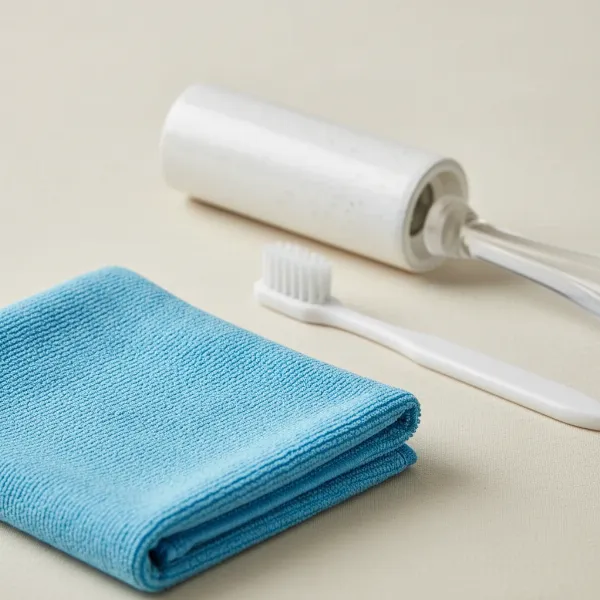 A collection of safe cleaning tools for smart speaker fabric mesh, including microfiber cloths, soft brush, and a lint roller.
The Role of a Handheld Vacuum: Power and Precaution
When dust accumulates deeper within the fabric weave, a handheld vacuum cleaner can be a powerful ally, but only when used correctly. Utilize it on its lowest suction setting and, critically, without any brush attachment. Hold the vacuum nozzle approximately 2 cm away from the fabric surface, ensuring no direct contact, and limit suction to no more than 3 seconds per zone. This method effectively lifts embedded dust without risking fiber compression or driving particles deeper into the speaker.
When to Consider a Slightly Damp Cloth (with extreme caution)
While dry methods are preferred, a very slightly damp cloth can be used for light smudges that dry methods can’t remove. It is paramount that the cloth is only damp, not wet, with no dripping water whatsoever. Use only plain water—never cleaning solutions, soaps, or detergents—as these can leave residues, attract more dust, or even damage the fabric and underlying components. Always wring the cloth out completely before use and apply with light strokes. After using any moisture, allow the speaker to air dry completely for at least 15-20 minutes before plugging it back in.
Step-by-Step Guide: How to Clean Your Smart Speaker’s Fabric Mesh
Cleaning your smart speaker’s fabric mesh doesn’t have to be daunting. By following these steps, you can keep your device looking and performing its best. Remember, patience and gentleness are key.
Step 1: Power Down and Prepare
Before beginning any cleaning, always ensure your smart speaker is completely unplugged from its power source. This is a critical safety measure to prevent electrical hazards and protect the device from potential damage during cleaning. Choose a clean, well-lit workspace where you can comfortably access all sides of the speaker.
Step 2: Gentle Dust and Lint Removal (Regular Maintenance)
For routine cleaning and to tackle everyday dust and lint, start with a dry, soft-bristled brush or a lint roller to remove loose debris and pet hair from the fabric surface. Follow this by gently wiping the entire fabric mesh with a clean, dry microfiber cloth using light, outward strokes. If dust appears embedded, use a handheld vacuum on its lowest setting, holding it slightly away from the surface without direct contact, to lift deeper particles. This dry approach is the safest and most effective for regular upkeep.
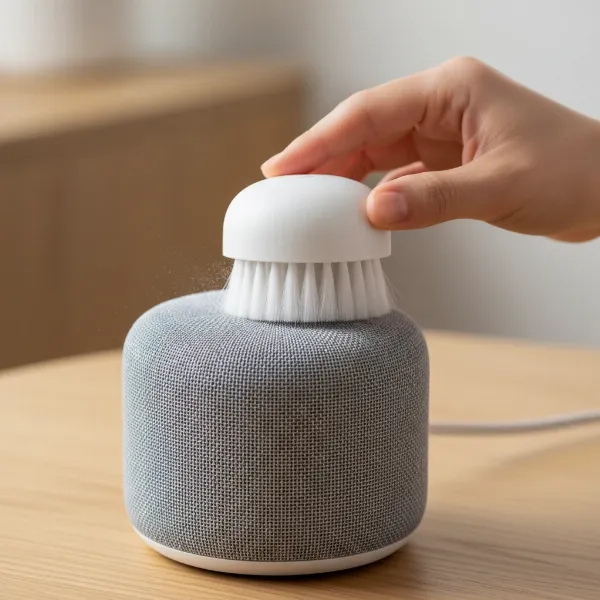 A person gently cleaning smart speaker fabric mesh with a soft brush, illustrating dust removal.
Step 3: Tackling Stubborn Stains (The Delicate Approach)
For stubborn stains that dry methods cannot remove, proceed with extreme caution. Only use a cloth very slightly dampened with plain water. Wring the cloth out thoroughly so there is no dripping water. Gently blot the stained area, working from the outside of the stain inwards to prevent spreading. Do not rub vigorously, as this can push the stain deeper or damage the fabric fibers. For very specific, minor spots, some users have reported success with products like a Tide To Go pen or a lightly dampened Mr. Clean Magic Eraser. However, these methods involve chemicals and abrasives, and manufacturers generally advise against them due to potential damage to the fabric or the device itself. Use such products only as a very last resort, with extreme caution, and entirely at your own risk, testing on an inconspicuous area first.
Step 4: Drying and Final Inspection
After any cleaning that involves moisture, it is imperative to allow your smart speaker to air dry completely before plugging it back in. This typically takes 15-20 minutes. Ensure the fabric mesh feels entirely dry to the touch to prevent any electrical issues or internal damage from residual moisture. Once dry, perform a final visual inspection to confirm cleanliness and that no fabric fibers have been disturbed or damaged.
Manufacturer-Specific Cleaning Guidelines
While general cleaning principles apply to most smart speakers, some manufacturers offer specific advice tailored to their products’ materials. Adhering to these guidelines can help preserve your device and its warranty.
Google Home/Nest Speakers
Google’s official stance for its Nest smart speakers and displays, which often feature a blend of nylon and polyester fabric, is to use a clean, soft, and dry cloth for cleaning. Google explicitly warns against using household chemicals such as alcohol, benzene, or cleaning powders, as these can cause damage to your devices. For dust, a dry microfiber cloth is generally sufficient.
Amazon Echo Devices
Amazon recommends dampening a soft cloth with water and a small amount of rubbing alcohol to clean some Echo speakers and displays. However, it’s crucial to note that this recommendation is typically for hard surfaces and screens, not the fabric mesh exterior. For the fabric itself, Amazon advises against harsh chemicals and abrasive cleaning tools that could ruin your devices. For fabric-covered Echo models, a dry microfiber cloth or a low-suction vacuum remains the safest bet for the mesh.
Apple HomePod
Apple generally recommends using a dry microfiber cloth for routine cleaning of its HomePod and HomePod Mini speakers. If necessary, Apple states that a damp cloth can be used on its surface, but this should be done with extreme care, ensuring no moisture seeps into the device. Importantly, Apple also lists numerous chemicals to avoid, including window cleaners, household cleaners, aerosol sprays, solvents, ammonia, and other abrasives, as these can cause damage. They also specifically caution against using compressed air on the HomePod.
Advanced Tips for Smart Speaker Longevity and Cleanliness
Beyond just cleaning, strategic placement and regular habits can significantly extend the life and cleanliness of your smart speaker’s fabric mesh.
Optimal Placement to Minimize Dust
Consider where you place your smart speaker in your home. Areas prone to high dust accumulation, direct sunlight, or heavy foot traffic can increase how quickly its fabric gets dirty. Placing your speaker on a stable surface away from open windows, vents, and areas where cooking grease or heavy aerosols are used can significantly reduce the frequency of deep cleaning required. Elevating it slightly can also help minimize dust accumulation.
Regular Maintenance Schedule
Consistency is key to keeping your smart speaker pristine. Implement a regular, light cleaning schedule—perhaps once a week or bi-weekly—using a dry microfiber cloth or a lint roller to remove surface dust and pet hair. This proactive approach prevents heavy buildup, reducing the need for more intensive and potentially risky cleaning methods in the future. A quick wipe-down as part of your general tidying routine can make a big difference.
What to Absolutely Avoid (Chemicals, Harsh Tools, Liquids)
To protect your smart speaker’s acoustic integrity and its aesthetic, there are certain cleaning agents and tools you should never use on its fabric mesh. Avoid harsh chemical cleaners, abrasive pads, window cleaners, bleach, hydrogen peroxide, solvents, ammonia, and aerosol sprays, as these can damage the fabric, leave residue, or even affect the internal electronics. Similarly, refrain from using stiff brushes, excessively wet cloths, or high-pressure compressed air, all of which can alter the fabric’s weave, push dust deeper, or introduce damaging moisture. When in doubt, always err on the side of caution with dry, gentle methods.
Comparison Table: Recommended Cleaning Tools
Selecting the right tools is paramount for effective yet safe cleaning of your smart speaker’s fabric mesh. Here’s a quick overview of recommended items.
| Tool | Purpose | Key Benefit | Caution |
|---|---|---|---|
| Soft Microfiber Cloth | Removing surface dust, light smudges | Gentle, non-abrasive, effective for daily wipe-downs | Avoid harsh rubbing; ensure it’s clean and dry |
| Soft-Bristled Brush (e.g., new toothbrush) | Loosening embedded dust and lint from crevices | Reaches into fabric weave without damage | Use very gently with light, circular motions |
| Handheld Vacuum (low suction) | Deeper dust and lint removal from the weave | Efficiently lifts particles without direct contact | Maintain 2 cm distance, use lowest power setting, no attachments |
| Lint Roller | Collecting pet hair, visible surface lint | Quick and highly effective for furry debris | Ensure roller is not overly sticky to avoid residue transfer |
| Slightly Damp Cloth (water only) | Tackling very minor, non-oily surface smudges/stains | Can lift certain types of dirt that dry methods miss | Never saturate; wring out completely; test discreetly; use only plain water |
Expert Insights
“The weave density, tension, and depth of a smart speaker’s fabric grille are calibrated to allow sound waves to pass unimpeded. When mis-cleaned, two irreversible harms occur: fiber compression, which dampens mid-to-high frequencies, and electrostatic dust migration, where aggressive tools drive fine particles deeper into the backing layer—where they resonate and distort bass response.” – Dr. Lena Cho, Senior Acoustics Engineer, Harman International
Conclusion
Caring for your smart speaker’s fabric mesh is crucial for both its aesthetic appeal and its acoustic performance. By prioritizing gentle, dry cleaning methods for regular maintenance, and approaching any stubborn stains with extreme caution and minimal moisture, you can ensure your device remains a clear-sounding, visually appealing centerpiece in your home. Remember to always power down your speaker before cleaning and to adhere to manufacturer guidelines where available, avoiding harsh chemicals and abrasive tools at all costs. A little attention goes a long way in preserving your investment. What simple cleaning tip has made the biggest difference for your smart speaker?
Frequently Asked Questions
Can I use rubbing alcohol to clean my smart speaker’s fabric?
Generally, no. Most Smart Speaker manufacturers, including Google and Apple, explicitly advise against using alcohol or other harsh chemicals on the fabric mesh, as they can damage the material or leave residues. While Amazon might recommend rubbing alcohol for some hard surfaces, it is typically not for the delicate fabric grilles.
How often should I clean my smart speaker’s fabric mesh?
For optimal maintenance, a light dry cleaning using a microfiber cloth or lint roller every week or two is recommended to prevent dust and lint buildup. Deeper cleaning with a low-suction vacuum can be done monthly or as needed, depending on your home environment.
What happens if I get my smart speaker’s fabric too wet?
Saturating the fabric mesh with water can cause serious damage. Moisture can lead to fiber compression, altering the acoustic properties and dampening sound. More severely, it can seep into the internal electronics, causing permanent damage, short circuits, or malfunctions, potentially voiding your warranty. Always ensure cloths are barely damp and the speaker is fully dry before powering on.