The global smart speaker market has transformed how we interact with technology, bringing voice-activated assistants into our homes. In South Korea, this revolution took a distinct local turn with the emergence of devices specifically designed to cater to the unique linguistic and service ecosystem of the country. Among these, the Kakao Mini stands out as a prominent player, deeply integrated into the daily lives of Korean users. This review will delve into the Kakao Mini’s features, performance, and how it carves its niche in the competitive Korean smart speaker landscape, helping you understand if this device is the perfect fit for your smart home needs.
 Kakao Mini smart speaker in a modern Korean living room, blending seamlessly with home decor.
Popular Smart Speaker Types in the Market
Overview of Smart Speakers
|
Our Picks for the Best Smart Speaker in 2026
As an Amazon Associate I earn from qualifying purchases.
|
||
| Num | Product | Action |
|---|---|---|
| 1 | Sony SRS-XB100 Wireless Bluetooth Portable Lightweight Super-Compact Travel Speaker, Durable IP67 Waterproof & Dustproof Shower Speaker, 16 Hour Battery, Versatile Strap, & Hands-free Calling, Black |

|
| 2 | Portable Bluetooth Speaker Valentines Gifts For Him: Powerful Crystal Clear Sound/Romantic Light/IPX5 Waterproof/All Day Playtime/BT 5.3/TWS Paring,Small Wireless Speaker for Outdoor-Travel-Date Night |
|
| 3 | Google Audio Bluetooth Speaker - Wireless Music Streaming, Powerful Sound, Assistant Built-in, Wi-Fi and Bluetooth Connectivity, Smart Home Control, Stereo Pairing - Chalk |
|
| 4 | Bluetooth Speaker with HD Sound and Lights, Portable Wireless, Long-lasting battery life, TWS Pairing, for Home/Party/Outdoor/Travel/Beach, Stocking Stuffers, White Elephant Gifts for Adults (Black) |
|
| 5 | Sonos Era 100 - White - Wireless, Alexa Enabled Smart Speaker |
|
| 6 | Bluetooth Speaker with HD Sound, Portable Wireless, IPX5 Waterproof, Up to 20H Playtime, TWS Pairing, BT5.3, for Home/Party/Outdoor/Beach, Electronic Gadgets, Birthday Gift (Black) |
|
| 7 | WiiM Sound Lite Smart Speaker, Hi‑Res 24‑bit/192 kHz, AI RoomFit™ Room Correction, 100W Peak, Wi‑Fi 6E/Bluetooth 5.3, Multi‑Room & Stereo Pairing, Black |
|
| 8 | Belkin SOUNDFORM Elite Hi-Fi Smart Speaker + Wireless Charger (Alexa Voice-Controlled Bluetooth Speaker) Sound Technology By Devialet, Fast Wireless Charging for iPhone, Samsung Galaxy & More - White |
|
| 9 | Mini Bluetooth Speaker, Smart Wireless Portable Speaker with Touchscreen, Loud HD Sound, LED Lights, BT5.4, All In One Small Audio for Home/Outdoor/Travel/Shower/Party/Beach/Camping/Hiking/Cycling |
|
| 10 | aowoka Bluetooth Speaker, 2025 Portable Wireless Speakers with Led Light, Bluetooth 5.4, 24H Playtime, Enhanced Bass, IPX7 Waterproof, Outdoor Speaker for Travel, Sport, Party, Biking. |
|
A smart speaker is a voice-controlled device that uses an integrated artificial intelligence (AI) assistant to perform various tasks, from playing music to providing information and controlling smart home devices. These speakers are typically always-on, listening for a wake word to activate their capabilities. The journey of smart speakers began with pioneering devices like the Amazon Echo, followed by Google Home, which quickly expanded the market internationally. In South Korea, domestic tech giants like Kakao and Naver introduced their own AI speakers, tailoring experiences to local language and services. Prominent global brands include Amazon, Google, Apple, and Sonos, while in Korea, Kakao, Naver, Samsung, LG, SK Telecom, and KT Corporation are key players.
Categorizing Smart Speakers by Features
Smart speakers are primarily defined by their virtual assistants, which form the core of their intelligence. Globally, Google Assistant, Amazon Alexa, and Apple’s Siri dominate, offering broad functionality and extensive smart home compatibility. In Korea, the Kakao Mini leverages the proprietary “Kakao I” AI platform, while Naver’s Clova speakers use their own AI. These local assistants are specifically optimized for the Korean language and seamlessly integrate with popular local services. While some basic Bluetooth speakers might offer minimal voice control, true smart speakers excel through deep AI integration, enabling complex commands, personalized responses, and connectivity with a wider range of devices. The Kakao Mini, for instance, is a highly multifunctional smart speaker, acting as an entertainment hub, a communication tool, and a personal assistant for everyday tasks within the Kakao ecosystem.
Categorizing Smart Speakers by Size and Design
Smart speakers come in various sizes and designs, catering to different aesthetic preferences and spatial requirements. Mini smart speakers, often compact and unobtrusive, are ideal for smaller rooms or blending into existing decor, a category where the Kakao Mini fits perfectly. Mid-sized speakers typically offer a balance between audio quality and footprint, while larger models prioritize robust sound performance, often acting as primary audio systems. Unique designs can also serve as decorative pieces. The Kakao Mini features a minimalistic, fabric-covered design with soft curves, making it “home-friendly” and easily integrated into various interior styles. It often comes in a “Cozy Black” color and even allows for the attachment of cute character figurines, adding a touch of personalization that resonates with Korean culture.
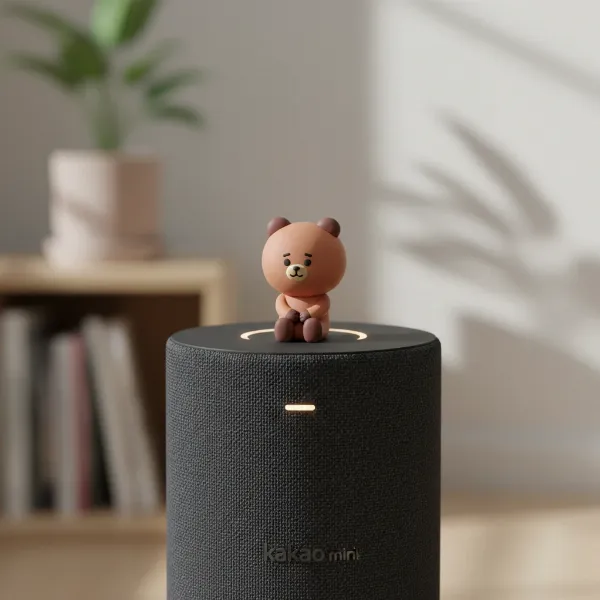 Close-up of Kakao Mini smart speaker with a detachable Ryan character figurine on top.
Guide to Choosing a Smart Speaker
Selecting the right smart speaker involves understanding your personal needs and how the device will integrate into your lifestyle. With many options available, particularly in the Korean market, a thoughtful approach ensures satisfaction.
Determining Your Usage Needs
Before purchasing a smart speaker, consider your primary objectives. Are you mainly looking for a device to stream music? The Kakao Mini connects with Melon, Korea’s most popular music streaming service, offering tailored recommendations based on your tastes and mood. Do you envision it as a central hub for smart home control? While the Kakao Mini’s initial smart home integration was noted as limited, its capabilities have evolved. Perhaps you need it for communication? The Kakao Mini’s deep link with KakaoTalk allows you to send and check messages by voice, a unique advantage for users of Korea’s dominant messaging app. Additionally, it can call taxis via Kakao T. Your budget is also a crucial factor, as prices can vary significantly between models and brands. The Kakao Mini has historically been considered a cost-efficient option, especially during its initial launch.
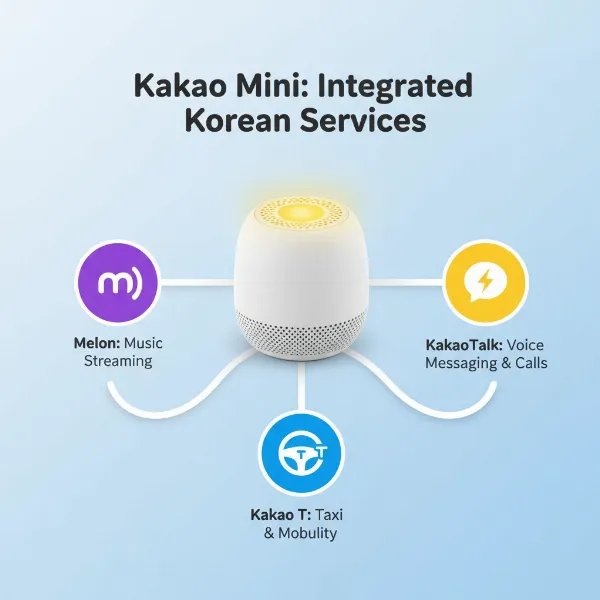 Infographic showing Kakao Mini connected to Melon, KakaoTalk, and Kakao T services.
Comparing Brands and Models
The South Korean smart speaker market features both local powerhouses and international giants. Local brands like Kakao and Naver offer unparalleled integration with Korean-specific services, language optimization, and cultural nuances. International brands like Google and Amazon provide broader global smart home ecosystems and multi-language support but may lack direct integration with Korean apps like KakaoTalk or Melon. It is essential to read product reviews and comparisons that highlight the strengths and weaknesses of each model within the Korean context. For instance, early reviews noted that while the Kakao Mini excelled in local service integration, its voice activation could sometimes be inconsistent. Comparing specifications such as microphone quality, connectivity options (Bluetooth, AUX), and the underlying AI platform (Kakao I, Naver Clova) will guide you toward an informed decision.
Factors to Consider When Buying a Smart Speaker
When making your final choice, several key factors should influence your decision:
- Sound Quality: For music lovers, audio fidelity is paramount. The Kakao Mini, with its 2-inch full-range speaker and passive radiator, offers “good enough” sound quality for everyday use and has implemented sound algorithms to enhance music and vocal range.
- Connectivity: Ensure the speaker supports the connection types you need, such as Bluetooth for external speakers or AUX output. The Kakao Mini supports both, offering flexibility.
- Smart Features: Evaluate the breadth and depth of the AI assistant’s capabilities. For Korean users, the Kakao Mini’s seamless integration with KakaoTalk, Melon, and Kakao T is a significant draw, allowing for voice messaging, music playback, and even taxi services.
- Design and Durability: Consider how the speaker will look in your home. The Kakao Mini’s minimalistic, fabric-covered design and the option to attach character figurines offer a blend of aesthetics and personalization.
- Price: Balance features and quality with your budget. The Kakao Mini was launched with a competitive price point, often accompanied by attractive pre-sale benefits like complimentary music subscriptions.
Comparison Table of Best Smart Speakers Currently Available
The South Korean smart speaker market presents a fascinating mix of local innovation and global competition. Here’s a comparison focusing on the Kakao Mini and its key counterparts:
| Model | Pros | Cons | Estimated Price (KRW) |
|---|---|---|---|
| Kakao Mini | Deep integration with Kakao ecosystem (Talk, Melon, T); cost-efficient; local language optimization; minimalistic design; character figurines for personalization. | Primarily Korean-only, limiting international language use; initial smart home integration was less extensive than global competitors; voice activation sometimes inconsistent. | 59,000 – 119,000 (Launch Price) |
| Naver Clova | Strong integration with Naver ecosystem (Naver Music, Line); local language optimization; competitive pricing; robust AI assistant for Korean users. | Similar limitations to Kakao Mini regarding global compatibility; integration mainly tied to Naver services. | ~99,000 (Launch Price) |
| Google Home Mini | Broad international language support; extensive global smart home device compatibility; rich knowledge base via Google Assistant. | Limited direct integration with Korean-specific services like KakaoTalk or Melon; language barriers for non-English users seeking Korean local context. | Varies by import/retailer |
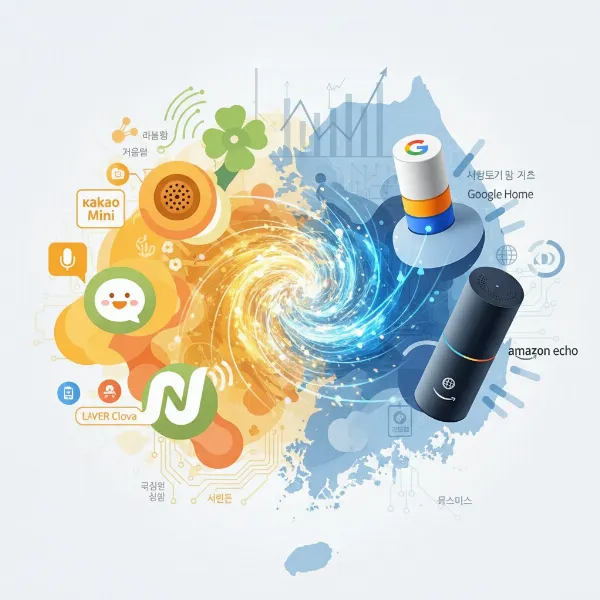 Visual metaphor of competition in the South Korean smart speaker market, local vs global brands.
“The Kakao Mini isn’t just a smart speaker; it’s a gateway to the entire Kakao ecosystem, designed to perfectly fit the digital lifestyle of Koreans.”
Tips for Using and Maintaining Your Smart Speaker
To maximize your Kakao Mini’s performance and longevity, follow these practical tips:
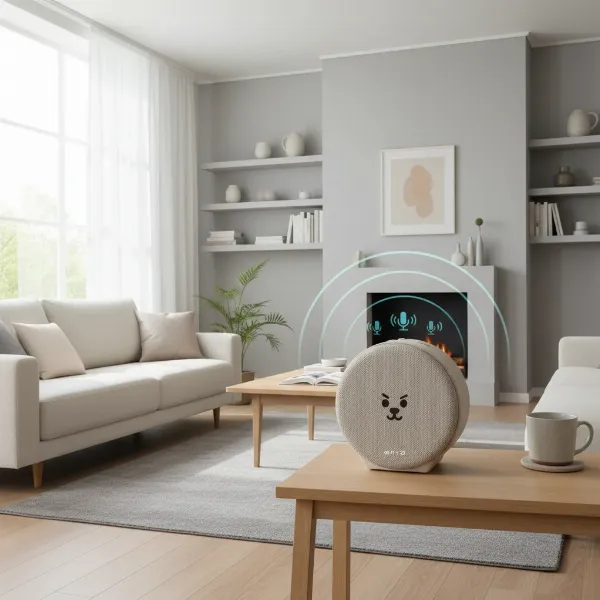 Kakao Mini placed optimally in a room, highlighting good microphone reception and sound distribution.
- Optimal Placement: Position your Kakao Mini in a central location within your room, away from obstructions or excessive background noise, to ensure its four long-distance microphones can clearly pick up your voice commands.
- Regular Cleaning: Gently wipe the fabric exterior and plastic surfaces with a soft, dry cloth to remove dust. Avoid using harsh chemicals or abrasive materials that could damage the finish.
- Software Updates: The Kakao Mini benefits from automatic software updates, which introduce new features and improve existing functionalities. Ensure your device is connected to Wi-Fi to receive these updates promptly, keeping your smart speaker at its peak performance.
- Proper Usage for Longevity: Avoid exposing the speaker to extreme temperatures or direct sunlight. If using a portable pack, ensure it is charged according to manufacturer guidelines to maintain battery health. While the Kakao Mini is designed for daily use, being mindful of its environment will prolong its lifespan.
Conclusion
The Kakao Mini has cemented its place as a significant smart speaker in the South Korean market by offering a deeply localized and highly integrated experience. With its “Kakao I” AI assistant, seamless connectivity to essential Korean services like KakaoTalk, Melon, and Kakao T, and a friendly, minimalistic design, it caters precisely to the needs of its target audience. While it may not offer the global compatibility of devices from Amazon or Google, its strengths lie in its tailored approach to Korean digital life. For anyone in South Korea seeking a smart speaker that speaks their language, understands their daily routines, and connects them effortlessly to their favorite local services, the Kakao Mini presents a compelling and cost-efficient choice. Have you considered how a Smart Speaker designed specifically for your local ecosystem could enhance your daily life?
Frequently Asked Questions
Is the Kakao Mini only available in Korea?
Yes, the Kakao Mini is primarily designed for and sold within the Korean market, with its AI assistant, Kakao I, and its deep integrations specifically optimized for the Korean language and local services like KakaoTalk and Melon.
What services does Kakao Mini integrate with?
The Kakao Mini integrates extensively with the Kakao ecosystem, including KakaoTalk for messaging, Melon for music streaming, Kakao T for taxi services, and various other Kakao and Daum services, providing a comprehensive localized experience.
Can I use Kakao Mini for smart home control?
Initially, the Kakao Mini had limited smart home integration compared to global competitors. However, Kakao continues to update its platform, and it offers evolving capabilities for controlling compatible smart home devices within the Korean ecosystem.
How does Kakao Mini compare to Google Home in Korea?
The Kakao Mini offers superior integration with Korean-specific services and language optimization, making it more convenient for local users. Google Home, while strong in international contexts and broader smart home ecosystems, has fewer direct integrations with popular Korean apps and may have language limitations for strictly Korean-speaking users.