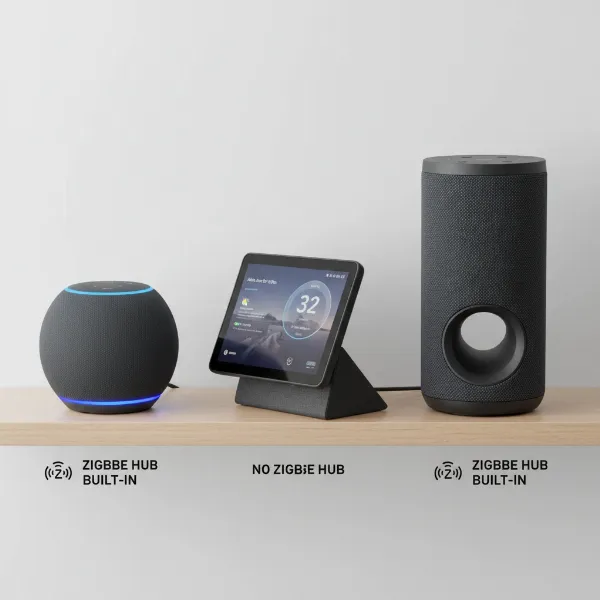
In today’s connected world, smart devices have become integral to our homes, simplifying daily tasks and providing instant access to information. From playing your favorite music to managing your smart lighting, these intelligent companions offer convenience at your command. However, when it comes to choosing between a smart speaker and a smart display, many find themselves at a crossroads, pondering whether a screen is truly a necessity. Understanding the fundamental differences and unique benefits of each will empower you to make an informed decision, ensuring your next smart device perfectly aligns with your lifestyle and home environment.
Understanding Smart Devices: Speakers vs. Displays
Delving into the world of smart home technology, it’s essential to differentiate between smart speakers and smart displays, as their core functionalities, while overlapping, cater to distinct user experiences. Each device brings a unique set of capabilities to the table, designed to integrate seamlessly into your daily life.
What are Smart Speakers and How Do They Work?
|
Our Picks for the Best Smart Speaker in 2026
As an Amazon Associate I earn from qualifying purchases.
|
||
| Num | Product | Action |
|---|---|---|
| 1 | Portable Bluetooth Speaker Valentines Gifts For Him: Powerful Crystal Clear Sound/Romantic Light/IPX5 Waterproof/All Day Playtime/BT 5.3/TWS Paring,Small Wireless Speaker for Outdoor-Travel-Date Night |

|
| 2 | aowoka Bluetooth Speaker, 2025 Portable Wireless Speakers with Led Light, Bluetooth 5.4, 24H Playtime, Enhanced Bass, IPX7 Waterproof, Outdoor Speaker for Travel, Sport, Party, Biking. |
|
| 3 | Sony SRS-XB100 Wireless Bluetooth Portable Lightweight Super-Compact Travel Speaker, Durable IP67 Waterproof & Dustproof Shower Speaker, 16 Hour Battery, Versatile Strap, & Hands-free Calling, Black |
|
| 4 | WiiM Sound Lite Smart Speaker, Hi‑Res 24‑bit/192 kHz, AI RoomFit™ Room Correction, 100W Peak, Wi‑Fi 6E/Bluetooth 5.3, Multi‑Room & Stereo Pairing, Black |
|
| 5 | Sonos Era 100 - White - Wireless, Alexa Enabled Smart Speaker |
|
| 6 | Mini Bluetooth Speaker, Smart Wireless Portable Speaker with Touchscreen, Loud HD Sound, LED Lights, BT5.4, All In One Small Audio for Home/Outdoor/Travel/Shower/Party/Beach/Camping/Hiking/Cycling |
|
| 7 | Belkin SOUNDFORM Elite Hi-Fi Smart Speaker + Wireless Charger (Alexa Voice-Controlled Bluetooth Speaker) Sound Technology By Devialet, Fast Wireless Charging for iPhone, Samsung Galaxy & More - White |
|
| 8 | Bluetooth Speaker with HD Sound and Lights, Portable Wireless, Long-lasting battery life, TWS Pairing, for Home/Party/Outdoor/Travel/Beach, Stocking Stuffers, White Elephant Gifts for Adults (Black) |
|
| 9 | Bluetooth Speaker with HD Sound, Portable Wireless, IPX5 Waterproof, Up to 20H Playtime, TWS Pairing, BT5.3, for Home/Party/Outdoor/Beach, Electronic Gadgets, Birthday Gift (Black) |
|
| 10 | Google Audio Bluetooth Speaker - Wireless Music Streaming, Powerful Sound, Assistant Built-in, Wi-Fi and Bluetooth Connectivity, Smart Home Control, Stereo Pairing - Chalk |
|
Smart speakers are voice-activated audio devices that serve as the discreet, audio-centric hub for your connected home. These devices primarily rely on audio input and output, functioning much like an intelligent radio or a sophisticated intercom system. Equipped with built-in microphones and a voice assistant like Amazon Alexa, Google Assistant, or Apple Siri, they can answer your queries, play music, listen to podcasts, set timers, make calls, and control other smart devices in your home with simple voice commands. Their strength lies in their simplicity and the ability to operate purely through auditory cues, making them excellent for background functions or when you cannot look at a screen. Popular examples include the Amazon Echo, Google Nest Mini, and Apple HomePod.
What are Smart Displays and How Do They Work?
A smart display is essentially a smart speaker augmented with a touchscreen, merging voice control with visual interaction. These devices take everything a smart speaker can do and add a visual dimension, offering a more interactive and versatile user experience. In addition to responding verbally, a smart display can show you information, stream video, provide a graphical interface for managing your smart home devices, display recipes, and even serve as a digital photo frame. You can interact with them using your voice or by tapping the screen, which unlocks new possibilities for tasks like video calls, viewing security camera feeds, and following step-by-step instructions. Key brands in this category include the Amazon Echo Show and Google Nest Hub.
Core Differences: Audio-Only vs. Visual Interaction
The fundamental distinction between smart speakers and smart displays lies in their primary mode of interaction. While both leverage powerful voice assistants to execute commands, the inclusion of a screen dramatically expands the scope of capabilities and user experience.
Voice Interaction: The Common Ground
Both smart speakers and smart displays offer hands-free voice control, acting as a gateway to digital assistants like Amazon Alexa, Google Assistant, and Apple Siri. This shared capability allows users to perform a wide array of tasks—from checking the weather and setting alarms to playing music and controlling smart home devices—all through verbal commands. The convenience of simply speaking your request, without needing to pick up a phone or touch a button, is a core benefit both device types deliver. They are designed to listen for your commands, process them, and provide an auditory response, making them incredibly useful for multitasking or when your hands are full.
The Power of the Screen: What a Display Adds
The addition of a touchscreen transforms the smart device experience, turning an audio-only interaction into a rich, multimodal one. A smart display doesn’t just tell you the weather; it can show you a detailed forecast for the week ahead, complete with visual icons and temperature graphs. This visual element makes complex tasks simpler and information more accessible. For instance, you can ask for a recipe and follow along with step-by-step instructions displayed on the screen, or stream video content from services like YouTube and Netflix. The screen also acts as a visual dashboard for your smart home, allowing you to intuitively control lights, thermostats, and view live feeds from security cameras with a tap. Furthermore, smart displays enable video calls, connecting you face-to-face with friends and family, and can double as dynamic digital photo frames, showcasing your cherished memories.
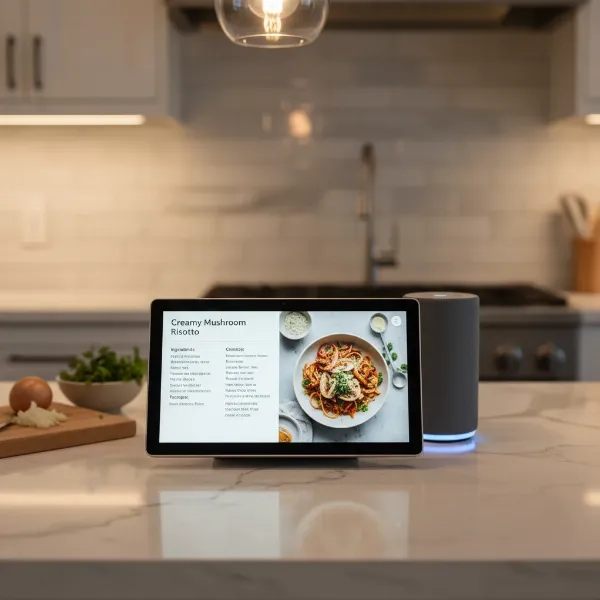 Smart display showing a recipe in a modern kitchen with a smart speaker in the background
Smart Speaker Advantages: When Less is More
While smart displays offer a broader range of features, smart speakers hold distinct advantages that make them the preferred choice for many users. Their simplicity and focus on audio deliver specific benefits that a screen-enabled device might not, especially concerning cost, design, and privacy.
Affordability and Accessibility
Smart speakers are generally more affordable than their display-equipped counterparts, making them an excellent entry point into the smart home ecosystem. For those on a budget, or simply looking for basic voice assistant functionality without the added cost of a screen, a smart speaker offers significant value. Their lower price point also makes it feasible to place multiple units around the house, ensuring voice control is available in every room without a substantial investment. This accessibility makes smart speakers a popular choice for first-time smart home adopters.
Discreet Design and Portability
With no screen to command attention, smart speakers typically boast a more compact and discreet design. They can blend seamlessly into any room’s decor, often going unnoticed until activated by voice. Their smaller footprint and lighter weight also make certain models highly portable, allowing you to easily move them between rooms or even take them with you on the go, depending on their power source. This discreetness is particularly appealing for users who prefer their technology to be heard, not seen, and appreciate minimalist aesthetics.
Enhanced Privacy
One of the most significant advantages for many users is the enhanced privacy offered by smart speakers. Lacking cameras, these devices alleviate concerns about video surveillance, making people more comfortable placing them in private spaces like bedrooms or bathrooms. While all smart devices process voice commands, the absence of a visual component can lead to a greater sense of security and personal space. For those prioritizing audio-only interaction and mindful of potential privacy implications associated with cameras, a smart speaker provides a reassuring choice.
Focused Audio Experience
Many smart speakers are engineered with a primary focus on audio quality, delivering impressive sound for music, podcasts, and audiobooks. Without the need to accommodate a screen and its associated hardware, manufacturers can dedicate more internal space and resources to speaker drivers and acoustic design. This often results in richer bass, clearer vocals, and a more immersive listening experience compared to similarly priced smart displays. For audiophiles or anyone whose primary use case is high-quality music playback, certain smart speaker models offer a superior sonic performance.
Smart Display Benefits: The Visual Edge
For users seeking a more comprehensive and interactive smart home experience, smart displays present a compelling case. The inclusion of a screen unlocks a wealth of visual information and functionalities that simply aren’t possible with an audio-only device.
Richer Information and Entertainment
Smart displays excel at delivering information in a visually engaging way. Instead of just hearing the weather forecast, you can see detailed daily and weekly projections. When playing music, you can view album art, track information, and even browse related artists. Beyond static information, smart displays are entertainment hubs, capable of streaming video from services like YouTube, Netflix, and other platforms directly to their screens. This visual enhancement transforms routine tasks into more engaging experiences, whether you’re catching up on news headlines or following a cooking tutorial.
Advanced Smart Home Control
A smart display acts as a central command center for your entire smart home ecosystem. Its touchscreen interface provides an intuitive dashboard for managing all your connected devices. You can visually dim lights, adjust thermostat settings, lock smart doors, and even view live feeds from your security cameras with a simple tap. This visual control is particularly beneficial in households with multiple users who may not remember specific voice commands, offering a user-friendly alternative for managing smart home routines. It also offers a quick glance at the status of various devices without needing to verbally query your assistant.
> “Smart displays bridge the gap between voice commands and intuitive visual feedback, making complex smart home management feel effortless and accessible to everyone in the household.” – Alice Chen, Smart Home Integration Specialist
Communication and Connectivity
The integrated camera and screen on a smart display open up new avenues for communication. You can make and receive hands-free video calls with friends and family, turning your kitchen or living room into a convenient communication hub. This is especially useful for staying connected with loved ones or for quick check-ins. Moreover, smart displays can integrate with video doorbells, allowing you to see who’s at your front door, speak to visitors, and even unlock the door remotely, enhancing home security and convenience. Some models can even act as a security camera themselves, monitoring a room when you’re away.
Choosing Your Device: Factors to Consider
Deciding between a smart display and a smart speaker ultimately boils down to your personal needs, preferences, and how you envision integrating smart technology into your daily life. Thoughtful consideration of several key factors will guide you toward the perfect choice.
Your Primary Use Case
Begin by identifying your main reasons for wanting a smart device. If your primary goal is to stream music, set timers, get quick answers, and control basic smart home functions via voice, a smart speaker is likely sufficient. However, if you crave visual feedback for recipes in the kitchen, desire video calls with distant family, want a visual dashboard for complex smart home routines, or enjoy streaming video, a smart display will offer a more fulfilling experience. Consider specific rooms: a discreet speaker might be ideal for a bedroom, while a display thrives in a busy kitchen or living area.
Budget and Aesthetics
Smart speakers typically offer a more budget-friendly entry point, with various models available across different price ranges. Smart displays, due to their added screen and sometimes enhanced audio components, generally come with a higher price tag. Beyond cost, consider the aesthetics. Smart speakers often have a minimalist design that blends into any decor, while smart displays, with their prominent screens, make more of a visual statement. Choose a device whose design complements your home’s interior and fits comfortably within your budget.
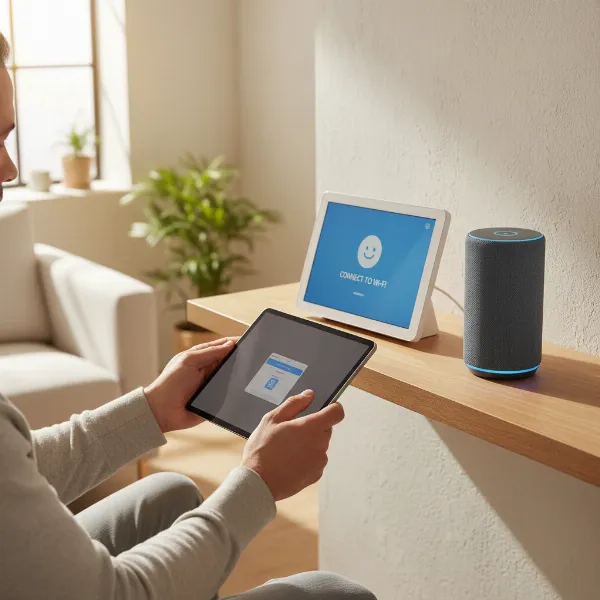 A person setting up a smart display and a smart speaker side-by-side
Privacy Concerns
Privacy is a significant consideration, especially with devices that include cameras and microphones. While both smart speakers and smart displays have microphones that are always listening for your commands, smart displays also feature cameras for video calls and sometimes for motion sensing. If the thought of a camera in your living space raises privacy concerns, a smart speaker might offer more peace of mind. Many smart displays, however, come with physical camera shutters or electronic privacy controls to disable the camera and microphone when not in use, offering a compromise for those who value the visual features but also prioritize privacy.
Ecosystem Compatibility
The smart home ecosystem you’ve already invested in, or plan to build, is crucial. The major players are Amazon Alexa, Google Assistant, and Apple HomeKit (via Siri on HomePods). While many smart devices are cross-compatible, opting for a smart speaker or display that natively supports your chosen ecosystem ensures seamless integration and access to all features. For example, if you have many Google Home devices, a Nest Hub or Nest Mini will likely offer the most cohesive experience. Similarly, Amazon Echo devices integrate best with Alexa-enabled smart home products.
Comparison Table: Smart Speaker vs. Smart Display
To help clarify the distinctions and guide your decision, here’s a direct comparison of smart speakers and smart displays across key features:
| Feature | Smart Speaker | Smart Display |
|---|---|---|
| Interaction | Voice, Audio Output, Limited physical controls | Voice, Touchscreen, Visual Output, Audio Output |
| Core Functions | Music, podcasts, alarms, timers, basic queries | All speaker functions + visual info, video, calls |
| Smart Home | Voice control | Voice & visual dashboard control, camera feeds |
| Entertainment | Music, audiobooks | Music, video streaming, photo display |
| Privacy | No camera, audio focus, perceived higher privacy | Includes camera for video calls (can be physically covered/disabled) |
| Typical Cost | Lower, more entry-level options | Higher, premium models with more features |
| Ideal Placement | Any room, discreet, bedside | Kitchen, living room, office, home entrance (where screen is useful) |
Tips for Maximizing Your Smart Device
Regardless of whether you choose a smart speaker or a smart display, a few best practices can help you get the most out of your device and enhance your overall smart home experience.
To start, consider the optimal placement for your device. For smart speakers, a central location in a room allows for better microphone pickup and sound dispersion. For smart displays, placing them where the screen is easily visible and accessible—like a kitchen counter for recipes or a living room side table for smart home control—maximizes their visual utility. Regularly updating the software for your smart device is crucial for security, performance, and access to new features. Most devices update automatically, but it’s good to periodically check for manual updates.
Integrating your smart device with other smart home devices can unlock powerful automations and routines. For example, you can set your smart display to show your security camera feed when motion is detected, or have your smart speaker announce when the laundry cycle is complete. Finally, take the time to explore advanced features and routines within your device’s companion app. Customizing voice commands, setting up personalized schedules, and creating multi-device automations can significantly enhance the convenience and intelligence of your smart home.
Conclusion
The choice between a smart display and a smart speaker ultimately hinges on your lifestyle, priorities, and how you envision interacting with your smart home. A smart speaker offers a streamlined, audio-focused experience, excelling in discreet placement, affordability, and focused sound quality, making it ideal for those who prioritize simplicity and auditory interaction. Conversely, a smart display provides a richer, more interactive experience with its screen, offering visual information, video communication, and an intuitive dashboard for comprehensive smart home control.
Both devices serve as powerful hubs for modern living, connecting you to information, entertainment, and your smart home ecosystem. Consider what truly enhances your daily routine and aligns with your comfort levels regarding privacy and technology integration. Do you value the visual feedback and enhanced control a screen provides, or does the subtle, audio-first approach of a smart speaker better suit your home? Whichever you choose, embracing these intelligent devices will undoubtedly bring a new level of convenience and connectivity to your life.
Frequently Asked Questions
Can a Smart Speaker and a Smart Display work together?
Absolutely! Smart speakers and smart displays from the same ecosystem (e.g., all Amazon Echo devices or all Google Nest devices) are designed to work seamlessly together. You can group them for synchronized music playback across multiple rooms, use them as an intercom system, or have a Smart Speaker initiate a task that displays information on a nearby smart display. This synergy allows for a flexible and comprehensive smart home experience.
Are Smart Displays better for the kitchen?
Smart displays are often considered ideal for the kitchen due to their visual capabilities. They can display recipes step-by-step, play cooking videos, serve as a timer you can see across the room, and even offer a visual interface for adding items to your grocery list. Their ability to manage media and provide visual information while your hands are busy makes them highly practical in a culinary setting.
What are the main privacy considerations for Smart Displays with cameras?
The primary privacy consideration for smart displays with cameras is the presence of a video recording device in your home. While these cameras are designed for features like video calls and security monitoring, some users may feel uncomfortable with them in private areas. To address this, many smart displays include physical camera shutters or software controls to electronically disable both the camera and microphone, offering users control over their privacy.