Stepping into the world of smart speakers, you’re looking for more than just a device that plays music or answers questions; you seek an experience that blends seamlessly with your lifestyle. The Harman Kardon Citation One emerges as a contender in this evolving landscape, promising a fusion of sophisticated aesthetics and robust audio performance. But does this elegant speaker truly deliver on its promise of premium sound and intelligent functionality? Let’s delve into what makes the Citation One a distinctive choice for audiophiles and smart home enthusiasts alike.
Popular Smart Speaker Types in the Market
Smart speakers have rapidly transformed our homes, offering convenience and entertainment through voice command. Understanding the various types available helps in appreciating where the Harman Kardon Citation One fits within this dynamic market.
Overview of Smart Speakers
|
Our Picks for the Best Smart Speaker in 2026
As an Amazon Associate I earn from qualifying purchases.
|
||
| Num | Product | Action |
|---|---|---|
| 1 | Google Audio Bluetooth Speaker - Wireless Music Streaming, Powerful Sound, Assistant Built-in, Wi-Fi and Bluetooth Connectivity, Smart Home Control, Stereo Pairing - Chalk |

|
| 2 | aowoka Bluetooth Speaker, 2025 Portable Wireless Speakers with Led Light, Bluetooth 5.4, 24H Playtime, Enhanced Bass, IPX7 Waterproof, Outdoor Speaker for Travel, Sport, Party, Biking. |
|
| 3 | Portable Bluetooth Speaker Valentines Gifts For Him: Powerful Crystal Clear Sound/Romantic Light/IPX5 Waterproof/All Day Playtime/BT 5.3/TWS Paring,Small Wireless Speaker for Outdoor-Travel-Date Night |
|
| 4 | Mini Bluetooth Speaker, Smart Wireless Portable Speaker with Touchscreen, Loud HD Sound, LED Lights, BT5.4, All In One Small Audio for Home/Outdoor/Travel/Shower/Party/Beach/Camping/Hiking/Cycling |
|
| 5 | Sonos Era 100 - White - Wireless, Alexa Enabled Smart Speaker |
|
| 6 | Belkin SOUNDFORM Elite Hi-Fi Smart Speaker + Wireless Charger (Alexa Voice-Controlled Bluetooth Speaker) Sound Technology By Devialet, Fast Wireless Charging for iPhone, Samsung Galaxy & More - White |
|
| 7 | WiiM Sound Lite Smart Speaker, Hi‑Res 24‑bit/192 kHz, AI RoomFit™ Room Correction, 100W Peak, Wi‑Fi 6E/Bluetooth 5.3, Multi‑Room & Stereo Pairing, Black |
|
| 8 | Bluetooth Speaker with HD Sound and Lights, Portable Wireless, Long-lasting battery life, TWS Pairing, for Home/Party/Outdoor/Travel/Beach, Stocking Stuffers, White Elephant Gifts for Adults (Black) |
|
| 9 | Sony SRS-XB100 Wireless Bluetooth Portable Lightweight Super-Compact Travel Speaker, Durable IP67 Waterproof & Dustproof Shower Speaker, 16 Hour Battery, Versatile Strap, & Hands-free Calling, Black |
|
| 10 | Bluetooth Speaker with HD Sound, Portable Wireless, IPX5 Waterproof, Up to 20H Playtime, TWS Pairing, BT5.3, for Home/Party/Outdoor/Beach, Electronic Gadgets, Birthday Gift (Black) |
|
Smart speakers are voice-controlled devices equipped with integrated virtual assistants, enabling users to play music, control smart home devices, get information, and more, simply by speaking. Their evolution has been rapid, moving from basic voice assistants to sophisticated audio systems with multi-room capabilities and advanced sound processing. Pioneer brands like Amazon with its Echo series and Google with its Home devices initially dominated, paving the way for traditional audio companies such as Harman Kardon to integrate smart technology into their high-fidelity speaker lines. These devices have become central hubs for digital living, offering a blend of utility and entertainment.
Classifying Smart Speakers by Features
Smart speakers primarily differentiate themselves through their core functionalities. The most common type features integrated voice assistants such as Google Assistant, Amazon Alexa, or Apple Siri, allowing for hands-free control and access to a vast array of services. Speakers without built-in voice assistants often focus purely on superior audio quality or portability, connecting to smart devices via Bluetooth or Wi-Fi. Multi-functional smart speakers, like the Citation One, bridge this gap, offering robust audio alongside a powerful assistant and the ability to connect with other smart home ecosystems. This versatility allows them to serve as central entertainment and control hubs.
Classifying Smart Speakers by Size and Design
Smart speakers come in a diverse range of sizes and designs, catering to different spaces and aesthetic preferences. Mini smart speakers are compact and discreet, ideal for smaller rooms or subtle integration. Mid-sized speakers, like the Harman Kardon Citation One, strike a balance between sound output and footprint, making them suitable for living rooms, kitchens, or bedrooms. Larger smart speakers prioritize expansive sound stages and often include more advanced audio technology. Beyond size, design also plays a crucial role, with some speakers featuring utilitarian aesthetics and others, such as the Citation One with its elegant fabric finish, offering a more luxurious and decorative appeal.
Harman Kardon Citation One: In-Depth Review
The Harman Kardon Citation One stands out as a premium offering in the smart speaker category, combining Harman Kardon’s renowned audio expertise with Google Assistant’s intelligent capabilities. Let’s explore its specific attributes.
Design and Build Quality
The Citation One immediately makes a statement with its sophisticated design. Wrapped in a high-quality Kvadrat wool blend fabric, available in classic shades like black and grey, it exudes a premium aesthetic that seamlessly integrates into modern interiors. The cylindrical form factor is both elegant and understated, with a subtly chamfered edge on the top panel. The touch-sensitive controls for volume, microphone mute, Bluetooth pairing, and Google Assistant activation are integrated smoothly into the top surface, contributing to its minimalist appeal, though some users find these controls occasionally indistinct. Weighing around 2 kilograms and standing 188mm tall with a 140mm diameter, it feels substantial and well-built, suggesting durability. Its compact yet robust stature makes it versatile for placement in various rooms, from living spaces to bedside tables.
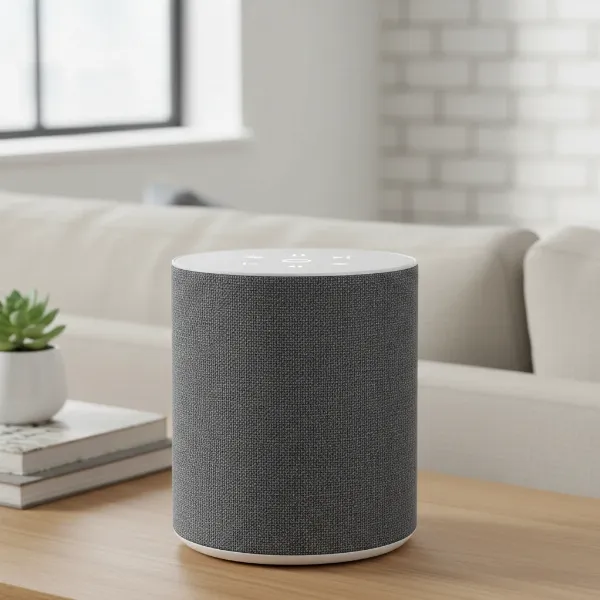 Harman Kardon Citation One smart speaker showcasing its premium Kvadrat fabric and elegant cylindrical design with touch controls.
Audio Performance
Harman Kardon’s audio pedigree is undeniably evident in the Citation One’s sound performance. Equipped with a 20mm tweeter and an 89mm woofer, driven by a 40W amplifier, this two-way speaker delivers a surprisingly rich and room-filling sound for its size. The most defining characteristic of its audio profile is its powerful bass. While this robust low-end response can be a significant advantage for genres like electronic music or hip-hop, providing an impactful and immersive listening experience, it can sometimes feel overwhelming for tracks with more subtle basslines, such as classical music, where it might dominate the soundstage. The speaker maintains clarity even at high volumes, with crisp highs and well-defined mids, ensuring vocals and instruments come through clearly. It excels at projecting sound, creating a larger-than-life presence despite being a mono speaker, and can be stereo-paired with another Citation One for a more expansive soundstage. A notable drawback, however, is the absence of an integrated equalizer (EQ) adjustment, meaning users cannot fine-tune the bass or other frequencies to their personal preference.
Smart Features and Connectivity
At its core, the Harman Kardon Citation One is a Google Assistant-powered smart speaker. Setup is straightforward through the Google Home app, allowing users to quickly connect to their Wi-Fi network and favorite music streaming services. Google Assistant enables a wide range of voice commands, from playing music and setting alarms to controlling compatible smart home devices and answering general knowledge questions. While the two far-field microphones generally perform well in detecting commands, even when music is playing, some reviews suggest that voice recognition can be average compared to Google’s own Nest devices, occasionally requiring a louder voice to be heard over high volumes. The speaker supports Google Cast for seamless audio streaming from various apps, as well as Spotify Connect and Bluetooth 4.2 for broader device compatibility. Its integration within the Google ecosystem also facilitates multi-room audio, allowing the Citation One to be grouped with other Google Assistant-enabled speakers for synchronized playback across different rooms.
Pros and Cons
Like any smart speaker, the Harman Kardon Citation One comes with its own set of advantages and limitations.
Pros:
- Premium Design: Elegant Kvadrat fabric and sleek aesthetics.
- Powerful Audio: Rich, room-filling sound with strong bass.
- Google Assistant: Full integration for smart home control and information.
- Multi-room Capability: Works seamlessly with other Citation speakers or Google Assistant devices.
- Solid Build Quality: Feels durable and well-constructed.
- Loud Without Distortion: Handles high volumes gracefully.
Cons:
- Overwhelming Bass: Can be too dominant for some musical tastes; no EQ adjustment.
- Average Voice Detection: May struggle with commands at very high volumes.
- Indistinct Touch Controls: Tactile feedback on top panel can be subtle.
- No 3.5mm Aux Input: Limited physical connectivity options.
- No 360-degree Sound: Directional sound projection.
- No Built-in Battery: Requires a mains power connection.
Comparison with Competitors
The Citation One enters a competitive market, facing rivals like the Sonos One, Google Nest Audio, and Amazon Echo Studio. The Sonos One offers a more balanced sound profile, dual voice assistant support (Alexa and Google Assistant), and the robust Sonos multi-room ecosystem, often seen as a direct competitor. Google Nest Audio is a more budget-friendly option, providing excellent Google Assistant integration but generally falling short on the premium audio quality and design of the Citation One. The Amazon Echo Studio offers Alexa integration, impressive spatial audio, and an adaptive EQ feature that tunes sound to the room, making it a strong alternative for those prioritizing customizable sound and the Alexa ecosystem. For pure audio quality, especially bass, the Citation One often holds its own, but its lack of EQ adjustability and single-assistant focus might be a deciding factor for some users.
Guide to Buying a Smart Speaker
Choosing the right smart speaker requires careful consideration of your personal needs, preferences, and how it will integrate into your home environment.
Determine Your Usage Needs
Before purchasing a smart speaker, define its primary role in your home. Are you mainly looking for a device to play high-quality music, or is smart home control your top priority? Do you need a speaker for ambient background noise, or a powerful system for parties? Consider whether you already use a specific voice assistant (Google Assistant, Alexa, Siri) and want to stick with that ecosystem for seamless integration. Your budget is also a key factor, as prices vary significantly based on features, brand, and audio quality.
Compare Brands and Models
The market is flooded with smart speakers from various manufacturers, each with unique strengths. Research reputable brands known for both audio quality and smart technology, such as Harman Kardon, Sonos, Amazon, and Google. Reading professional reviews and user comparisons can provide invaluable insights into real-world performance. Pay attention to specific model variations, like the Harman Kardon Citation One MKII, which might offer incremental improvements or new features like AirPlay support over its predecessor. Understanding the nuanced differences can help you make an informed decision aligned with your expectations.
Key Factors to Consider When Buying a Smart Speaker
When making your selection, several critical factors should guide your decision. Sound quality is paramount if music is a priority, considering aspects like bass response, clarity, and distortion at high volumes. Connectivity options, including Wi-Fi, Bluetooth, and multi-room capabilities, will determine how versatile the speaker is with your existing devices. Smart features, such as the responsiveness of the voice assistant and compatibility with your smart home ecosystem, are crucial for convenience. Design and durability contribute to how well the speaker fits into your home aesthetic and its longevity. Finally, price must align with the value proposition and your budget, ensuring you get the best performance for your investment.
Comparison Table: Best Smart Speakers Today
| Model | Pros | Cons | Estimated Price |
|---|---|---|---|
| Harman Kardon Citation One | Premium design, powerful bass, Google Assistant, multi-room audio, loud and clear. | Overwhelming bass (no EQ), average voice detection, indistinct touch controls. | $200 |
| Sonos One (Gen 2) | Balanced sound, choice of Alexa/Google Assistant, robust Sonos ecosystem, AirPlay 2. | More expensive, bass not as pronounced as Citation One, no Bluetooth for standalone use. | $219 |
| Google Nest Audio | Affordable, excellent Google Assistant, good sound for the price, stereo pairing. | Less premium design, not as powerful or bassy as premium speakers. | $99 |
| Amazon Echo Studio | Immersive spatial audio, adaptive EQ, strong Alexa integration, impressive volume. | Bass can be muddy, Alexa only (no Google Assistant). | $199 |
Tips for Using and Maintaining Your Smart Speaker
To maximize your Harman Kardon Citation One’s performance and ensure its longevity, proper usage and regular maintenance are essential.
- Optimal Placement: Position your smart speaker on a solid surface, away from walls or corners if you find the bass too overwhelming, as this can amplify low frequencies. Centrally located positions can help with voice assistant detection, although its directional sound means it doesn’t require a central placement for optimal audio projection.
- Regular Cleaning: Gently wipe the Kvadrat fabric exterior with a soft, dry cloth to remove dust. Avoid abrasive cleaners or liquids directly on the speaker to protect the fabric and internal components. Keep the touch panel clean to ensure responsive controls.
- Software Updates: Ensure your speaker’s firmware is always up to date. These updates often bring performance improvements, bug fixes, and new features. The Google Home app will usually notify you of available updates, which are typically installed automatically.
- Mindful Usage: While robust, avoid continuously playing music at maximum volume for extended periods, as this can strain the drivers over time. If you experience persistent voice recognition issues, check your Wi-Fi signal strength and consider repositioning the speaker or ensuring ambient noise levels are manageable.
- Protect from Elements: Keep the speaker away from direct sunlight, excessive humidity, and extreme temperatures to prevent damage to its internal electronics and fabric.
“The Harman Kardon Citation One marries acoustic prowess with smart functionality, offering a compelling package for those who value both sound and style in their connected home.” – Alex Chen, Lead Audio Engineer at SmartSound Innovations.
Conclusion
The Harman Kardon Citation One is a compelling smart speaker that truly embodies its premium branding. It delivers a powerful and engaging audio experience, characterized by its impressive bass and ability to fill a room with clear sound. Coupled with its elegant Kvadrat fabric design and seamless Google Assistant integration, it presents a sophisticated hub for music and smart home control. While its strong bass might not cater to every audiophile’s preference and the lack of EQ adjustment is a notable omission, its overall performance, build quality, and multi-room capabilities make it a strong contender in the competitive smart speaker market. For those committed to the Google Assistant ecosystem and seeking a speaker that looks as good as it sounds, the Harman Kardon Citation One offers undeniable value.
What truly elevates a Smart Speaker from a gadget to an indispensable part of your home?