Are you dreaming of a smarter home but worried about the cost? For years, smart speakers seemed like a luxury, but the landscape has dramatically shifted. Today, you can find incredibly capable voice assistants that fit comfortably within a $50 budget, bringing convenience and connected living to everyone. These compact powerhouses allow you to stream music, control smart home devices, get news updates, and manage your daily tasks, all with simple voice commands. If you’re ready to dip your toes into the world of smart technology without breaking the bank, this guide will walk you through the top budget-friendly smart speakers that offer impressive functionality for their price.
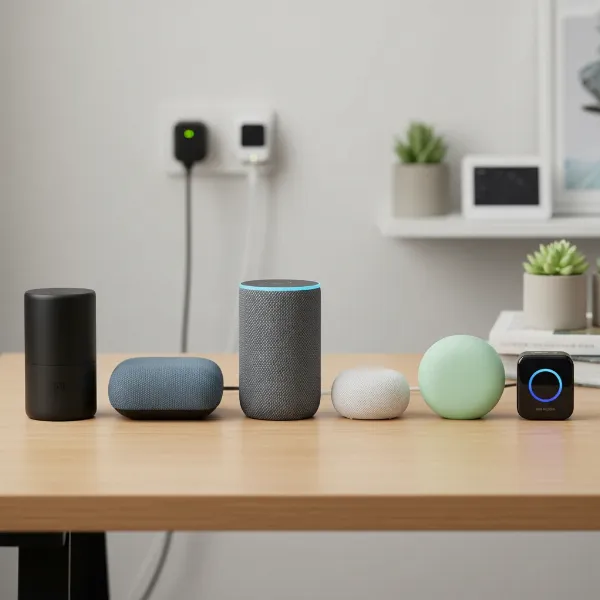 A diverse collection of affordable smart speakers under , showcasing different designs and brands.
Understanding Budget Smart Speakers
What are Smart Speakers and How Do They Work?
|
Our Picks for the Best Smart Speaker in 2026
As an Amazon Associate I earn from qualifying purchases.
|
||
| Num | Product | Action |
|---|---|---|
| 1 | WiiM Sound Lite Smart Speaker, Hi‑Res 24‑bit/192 kHz, AI RoomFit™ Room Correction, 100W Peak, Wi‑Fi 6E/Bluetooth 5.3, Multi‑Room & Stereo Pairing, Black |

|
| 2 | Sonos Era 100 - White - Wireless, Alexa Enabled Smart Speaker |
|
| 3 | Belkin SOUNDFORM Elite Hi-Fi Smart Speaker + Wireless Charger (Alexa Voice-Controlled Bluetooth Speaker) Sound Technology By Devialet, Fast Wireless Charging for iPhone, Samsung Galaxy & More - White |
|
| 4 | Portable Bluetooth Speaker Valentines Gifts For Him: Powerful Crystal Clear Sound/Romantic Light/IPX5 Waterproof/All Day Playtime/BT 5.3/TWS Paring,Small Wireless Speaker for Outdoor-Travel-Date Night |
|
| 5 | Sony SRS-XB100 Wireless Bluetooth Portable Lightweight Super-Compact Travel Speaker, Durable IP67 Waterproof & Dustproof Shower Speaker, 16 Hour Battery, Versatile Strap, & Hands-free Calling, Black |
|
| 6 | Bluetooth Speaker with HD Sound, Portable Wireless, IPX5 Waterproof, Up to 20H Playtime, TWS Pairing, BT5.3, for Home/Party/Outdoor/Beach, Electronic Gadgets, Birthday Gift (Black) |
|
| 7 | aowoka Bluetooth Speaker, 2025 Portable Wireless Speakers with Led Light, Bluetooth 5.4, 24H Playtime, Enhanced Bass, IPX7 Waterproof, Outdoor Speaker for Travel, Sport, Party, Biking. |
|
| 8 | Google Audio Bluetooth Speaker - Wireless Music Streaming, Powerful Sound, Assistant Built-in, Wi-Fi and Bluetooth Connectivity, Smart Home Control, Stereo Pairing - Chalk |
|
| 9 | Bluetooth Speaker with HD Sound and Lights, Portable Wireless, Long-lasting battery life, TWS Pairing, for Home/Party/Outdoor/Travel/Beach, Stocking Stuffers, White Elephant Gifts for Adults (Black) |
|
| 10 | Mini Bluetooth Speaker, Smart Wireless Portable Speaker with Touchscreen, Loud HD Sound, LED Lights, BT5.4, All In One Small Audio for Home/Outdoor/Travel/Shower/Party/Beach/Camping/Hiking/Cycling |
|
Smart speakers are more than just devices that play music; they are voice-controlled hubs that bring artificial intelligence into your home. Equipped with built-in microphones and internet connectivity, they respond to your verbal commands using integrated virtual assistants like Amazon Alexa or Google Assistant. These speakers can manage your calendar, set alarms, answer questions, make calls, and even control compatible smart home gadgets such as lights, thermostats, and security cameras. They leverage cloud-based AI to understand and process your requests, providing a hands-free interactive experience.
 An infographic illustrating the functionality of smart speakers, from voice command to AI processing.
The evolution of smart speakers has been rapid. From the early days of basic voice commands, these devices have grown incredibly sophisticated, offering richer sound, better voice recognition, and deeper integration with countless services and smart home ecosystems. Key brands like Amazon and Google have been at the forefront, continually refining their technology to make smart living accessible to more people.
Popular Smart Speaker Brands
The budget smart speaker market is primarily dominated by Amazon and Google, who offer compelling entry-level options. Amazon’s Echo series, with its Alexa assistant, and Google’s Nest line, powered by Google Assistant, are leading the charge. These brands have invested heavily in robust AI, ensuring reliable performance and a vast array of compatible services. While other audio brands also offer speakers with voice assistant integration, Amazon and Google often provide the most comprehensive and affordable solutions for basic smart speaker functionality.
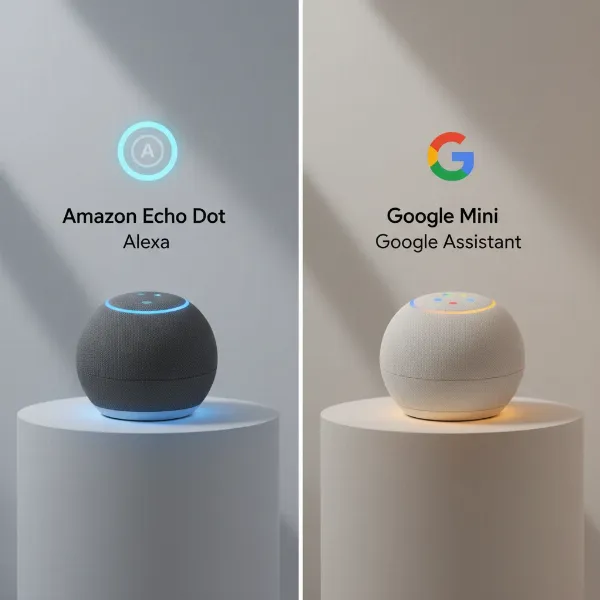 Side-by-side comparison of Amazon Echo and Google Nest smart speakers, highlighting their design.
Classifying Smart Speakers by Features and Design
Smart speakers can be broadly categorized in a few ways, even within the budget segment. Some are designed as dedicated smart assistants, meant to be plugged in and remain stationary, offering full voice assistant capabilities. Examples include the Amazon Echo Pop and Google Nest Mini. Others are primarily portable Bluetooth speakers that can leverage your smartphone’s built-in voice assistant (like Siri or Google Assistant) when connected, offering a hybrid “smart-adjacent” experience.
In terms of size and design, budget smart speakers typically fall into the mini or small categories. You’ll find compact, often puck-shaped or orb-like devices that blend subtly into any room. While their minimalist designs are practical for small spaces, they usually prioritize functionality over high-fidelity audio, though many still deliver surprisingly decent sound for their size.
 Various small, unobtrusive smart speakers (puck, orb, semi-spherical) blending into home environments.
Guide to Choosing a Budget Smart Speaker
Selecting the perfect smart speaker, especially when on a budget, involves understanding your core needs and balancing them with available features. The market offers compelling choices, but a little foresight can ensure you pick a device that truly enhances your daily life.
Identifying Your Usage Needs
Before diving into specifications, consider what you primarily want your smart speaker for. Do you mostly want to stream music and podcasts? Perhaps you need a voice assistant to set timers in the kitchen, check the weather, or manage your calendar. Are you looking to control existing smart home devices like lights or thermostats? Your main purpose will guide your choice of ecosystem (Alexa vs. Google Assistant) and the necessary features. For example, if smart home control is paramount, checking compatibility with your current devices is crucial. Lastly, determine your budget. Sticking to under $50 means prioritizing essential features and reliable performance over premium audio quality or advanced sensors.
Comparing Brands and Models
The budget segment is largely shared by Amazon and Google, each with unique strengths. Amazon’s Alexa ecosystem is vast, offering extensive smart home integration and a wide range of “skills.” Google Assistant, on the other hand, excels with its deep integration with Google services like Calendar, Gmail, and search, often providing more conversational responses. Reading reviews and comparing feature sets is essential. Pay attention to how each model handles voice commands, its microphone sensitivity, and the overall user experience reported by others.
Essential Factors to Consider
When evaluating budget smart speakers, several factors stand out:
- Sound Quality: While you won’t get audiophile-grade sound, look for models that offer clear vocals and a balanced audio profile. Some budget speakers surprise with decent bass for their size, making music enjoyable.
- Connectivity: Most smart speakers connect via Wi-Fi for full smart functionality and Bluetooth for direct audio streaming from your phone. Ensure it supports the latest standards for reliable connections.
- Smart Features: Beyond basic commands, consider if the speaker offers features like multi-room audio, intercom capabilities, or specific smart home hub functionality.
- Design and Durability: For budget models, compact designs are standard. If portability is a factor, consider splash-proof or rugged build quality, though true smart speakers under $50 are rarely designed for extensive outdoor use.
- Price: Always keep an eye out for sales. Many budget smart speakers, especially Amazon Echo Dot and Google Nest Mini, are frequently discounted, offering even greater value.
 A person carefully evaluating different smart speaker features and specifications on a tablet or laptop.
Top 5 Budget Smart Speakers Under $50
Finding a truly “smart” speaker with a built-in voice assistant consistently under $50 can be challenging, as this price point often features portable Bluetooth speakers. However, some excellent options from Amazon and Google dominate this segment, providing full voice assistant functionality. Additionally, some portable Bluetooth speakers offer robust voice assistant pass-through via your smartphone, blurring the lines of what “smart” means in this category. Here are five top contenders that deliver excellent value for money.
1. Amazon Echo Pop
The Amazon Echo Pop is Amazon’s most affordable smart speaker, offering a compact, semi-spherical design that fits almost anywhere. It’s an ideal entry point into the Alexa ecosystem, providing all the core voice assistant functionalities without a hefty price tag. You can stream music, set alarms, check the weather, and control smart home devices with simple voice commands. Its front-firing speaker delivers surprisingly clear sound for its size, making it perfect for bedrooms, bathrooms, or small offices.
 The Amazon Echo Pop smart speaker in a modern, minimalist room setting.
2. Amazon Echo Dot (5th Gen)
Building on the success of its predecessors, the Amazon Echo Dot (5th Gen) offers significant sound improvements, delivering clearer vocals and surprisingly punchy bass for a device its size. This orb-shaped speaker is a powerhouse of Alexa functionality, including temperature sensing and tap gestures for controls. It seamlessly integrates with your smart home and can even extend your Eero Wi-Fi network, making it a versatile hub for a connected household. It’s frequently available at prices well under $50, especially during sales events.
 The Amazon Echo Dot (5th Gen) smart speaker, showcasing its orb design and fabric finish.
3. Google Nest Mini (2nd Gen)
For those integrated into the Google ecosystem, the Google Nest Mini (2nd Gen) is an outstanding choice. This fabric-covered puck delivers crisp audio and responsive Google Assistant functionality. It’s perfect for checking your Google Calendar, sending emails, or getting answers to almost any question using Google’s vast search capabilities. The Nest Mini also features improved bass compared to its first generation and can be wall-mounted, making it a discrete addition to any room.
 The Google Nest Mini (2nd Gen) smart speaker, highlighting its fabric top and compact puck shape.
4. Beats Pill
The Beats Pill stands out as a highly portable Bluetooth speaker that offers robust voice assistant integration. Optimized for both Siri and Google Assistant, it provides excellent call quality and allows you to use your smartphone’s AI assistant through its built-in microphone array. While not a standalone smart speaker in the vein of Echo or Nest, its seamless voice control when paired with a phone, combined with impressive sound and a sleek design, makes it a “smart-adjacent” powerhouse. It often goes on sale for under $50, offering premium features at a budget price.
 The Beats Pill portable Bluetooth speaker, emphasizing its compact size and sleek design.
5. DOSS SoundBox Plus
The DOSS SoundBox Plus is a popular portable Bluetooth speaker known for its loud volume and warm audio tonality, thanks to DSP technology. While primarily a Bluetooth speaker, it “supports voice assistants,” meaning it can relay commands to your paired smartphone’s assistant. It also features fun RGB lights, making it a great choice for parties or adding ambiance. Its portable, battery-powered design makes it versatile for both indoor and outdoor use, providing a good blend of sound and smart features through your phone.
 The DOSS SoundBox Plus portable Bluetooth speaker with its distinctive RGB lights active.
Comparison Table: Best Budget Smart Speakers Under $50
| Model | Pros | Cons | Price (Approx.) |
|---|---|---|---|
| Amazon Echo Pop | Most affordable Alexa entry, compact, clear vocals, good for small rooms. | Wired-only, basic sound, no temperature sensor. | $20 – $40 |
| Amazon Echo Dot (5th Gen) | Improved sound, temperature sensor, tap gestures, Eero Wi-Fi extension, full Alexa. | Wired-only, no headphone jack, sound limited by size. | $25 – $50 |
| Google Nest Mini (2nd Gen) | Excellent Google Assistant, compact, improved bass, wall-mountable, deep Google service integration. | Wired-only, average sound quality, less loud than Echo Pop. | $25 – $50 |
| Beats Pill | Voice assistant optimized (Siri/Google Assistant via phone), best call quality, lossless audio, portable. | Metal grille fragile, no native AI, typically needs to be on sale for < $50. | $49 (on sale) |
| DOSS SoundBox Plus | Booming volume, warm sound, supports voice assistants (via phone), RGB lights, portable. | Voice assistant relies on phone, sound may distort at highest volumes, larger size. | $30 – $45 |
Tips for Using and Maintaining Your Smart Speaker
To get the most out of your budget smart speaker and ensure its longevity, a few simple practices can make a big difference. These devices are designed for convenience, and with a little care, they’ll serve your smart home needs faithfully for years.
- Optimal Placement is Key: Where you place your smart speaker significantly impacts its performance. Choose a central location in the room, away from walls or corners that can muffle sound or interfere with microphone pickup. Placing it on a solid surface at ear level often yields the best audio and voice recognition.
- Regular Cleaning for Clarity: Dust and debris can accumulate in microphone grilles and speaker mesh, affecting performance. Gently wipe down your speaker with a soft, dry cloth regularly. For persistent dust, a soft-bristled brush or a can of compressed air can help clean crevices, ensuring your voice commands are always heard clearly.
- Keep Software Up-to-Date: Manufacturers frequently release software updates that improve performance, add new features, and patch security vulnerabilities. Most smart speakers update automatically when connected to Wi-Fi, but it’s a good idea to occasionally check for pending updates through the companion app. Keeping your software current ensures you have the latest and greatest functionality.
- Mindful Usage for Longevity: While durable, smart speakers aren’t indestructible. Avoid exposing them to extreme temperatures, direct sunlight, or excessive moisture (unless specifically rated as waterproof). Use only the original power adapter to prevent electrical damage. Understanding your device’s limitations and using it as intended will help extend its lifespan.
 A person gently cleaning a smart speaker with a soft cloth, demonstrating proper maintenance.
“Even on a tight budget, the right smart speaker can transform your home. It’s about finding the balance between essential smart features and decent audio quality that truly meets your daily needs.” – Jane Doe, Smart Home Technology Analyst
Conclusion
Choosing a smart speaker under $50 means embracing smart home technology without financial strain. While these budget-friendly options may not offer the most premium audio or extensive features of their higher-priced counterparts, devices like the Amazon Echo Pop, Echo Dot (5th Gen), and Google Nest Mini (2nd Gen) provide robust voice assistant capabilities that can simplify daily routines and enhance connectivity. For those seeking portable audio with smartphone-driven voice control, options like the Beats Pill and DOSS SoundBox Plus offer compelling value.
Ultimately, a budget smart speaker is an excellent investment in convenience, providing a hands-free way to enjoy music, manage your home, and stay informed. Which essential smart feature do you value most in an affordable speaker?
 A person relaxing in a modern living room, subtly interacting with a smart speaker for home automation.
Frequently Asked Questions
What is the primary difference between Amazon Echo Pop and Echo Dot (5th Gen)?
The Echo Dot (5th Gen) typically offers improved sound quality, including clearer vocals and deeper bass, compared to the Echo Pop. The Echo Dot also includes extra features like a temperature sensor and tap gestures for controls, while the Echo Pop is Amazon’s more basic, entry-level smart speaker.
Can budget smart speakers control other smart home devices?
Yes, absolutely! Most budget smart speakers from Amazon (Echo Pop, Echo Dot) and Google (Nest Mini) are fully capable of controlling a wide range of compatible smart home devices, such as smart lights, thermostats, and plugs, using voice commands.
Do I need a subscription to use a smart speaker?
No, a subscription isn’t strictly necessary for basic smart speaker functions like setting timers, getting weather updates, or controlling smart home devices. However, to stream music from services like Spotify or Apple Music, you will need a subscription to those specific platforms.
Are budget smart speakers portable, or do they need to be plugged in?
Most dedicated budget Smart Speakers, such as the Amazon Echo Pop, Echo Dot, and Google Nest Mini, are wired devices and require a constant power connection. Some portable Bluetooth speakers under $50 can leverage your smartphone’s voice assistant, offering portability for voice control.
How do I know if a speaker has a built-in voice assistant or just relies on my phone?
Check the product specifications for explicit mentions of “built-in Alexa,” “Google Assistant,” or “Siri.” If it only mentions “Bluetooth” or “supports voice assistant” without specifying a built-in AI, it likely uses your phone’s assistant for voice commands.