In an era saturated with minimalist smart speakers, the Marshall Uxbridge Voice emerges as a distinctive contender, blending the iconic rock-and-roll aesthetic of Marshall amplifiers with the conveniences of modern voice assistant technology. As a seasoned audio technician, I’ve witnessed the evolution of smart speakers from their nascent stages to today’s sophisticated devices, and the Uxbridge Voice presents a unique proposition for those who prioritize both style and substance in their home audio setup. This review will dive deep into what makes this compact smart speaker stand out, its sound performance, smart features, and how it measures up against its established rivals, helping you decide if this retro-inspired powerhouse is the perfect fit for your lifestyle.
Popular Smart Speaker Categories
Before dissecting the Marshall Uxbridge Voice, let’s briefly understand the landscape of smart speakers. These devices have transformed how we interact with technology, offering voice-controlled access to music, news, smart home management, and more.
Overview of Smart Speakers
|
Our Picks for the Best Smart Speaker in 2026
As an Amazon Associate I earn from qualifying purchases.
|
||
| Num | Product | Action |
|---|---|---|
| 1 | WiiM Sound Lite Smart Speaker, Hi‑Res 24‑bit/192 kHz, AI RoomFit™ Room Correction, 100W Peak, Wi‑Fi 6E/Bluetooth 5.3, Multi‑Room & Stereo Pairing, Black |

|
| 2 | Bluetooth Speaker with HD Sound, Portable Wireless, IPX5 Waterproof, Up to 20H Playtime, TWS Pairing, BT5.3, for Home/Party/Outdoor/Beach, Electronic Gadgets, Birthday Gift (Black) |
|
| 3 | Belkin SOUNDFORM Elite Hi-Fi Smart Speaker + Wireless Charger (Alexa Voice-Controlled Bluetooth Speaker) Sound Technology By Devialet, Fast Wireless Charging for iPhone, Samsung Galaxy & More - White |
|
| 4 | Sony SRS-XB100 Wireless Bluetooth Portable Lightweight Super-Compact Travel Speaker, Durable IP67 Waterproof & Dustproof Shower Speaker, 16 Hour Battery, Versatile Strap, & Hands-free Calling, Black |
|
| 5 | Google Audio Bluetooth Speaker - Wireless Music Streaming, Powerful Sound, Assistant Built-in, Wi-Fi and Bluetooth Connectivity, Smart Home Control, Stereo Pairing - Chalk |
|
| 6 | Portable Bluetooth Speaker Valentines Gifts For Him: Powerful Crystal Clear Sound/Romantic Light/IPX5 Waterproof/All Day Playtime/BT 5.3/TWS Paring,Small Wireless Speaker for Outdoor-Travel-Date Night |
|
| 7 | Bluetooth Speaker with HD Sound and Lights, Portable Wireless, Long-lasting battery life, TWS Pairing, for Home/Party/Outdoor/Travel/Beach, Stocking Stuffers, White Elephant Gifts for Adults (Black) |
|
| 8 | Sonos Era 100 - White - Wireless, Alexa Enabled Smart Speaker |
|
| 9 | aowoka Bluetooth Speaker, 2025 Portable Wireless Speakers with Led Light, Bluetooth 5.4, 24H Playtime, Enhanced Bass, IPX7 Waterproof, Outdoor Speaker for Travel, Sport, Party, Biking. |
|
| 10 | Mini Bluetooth Speaker, Smart Wireless Portable Speaker with Touchscreen, Loud HD Sound, LED Lights, BT5.4, All In One Small Audio for Home/Outdoor/Travel/Shower/Party/Beach/Camping/Hiking/Cycling |
|
A smart speaker is an internet-connected device with an integrated virtual assistant, allowing users to interact using voice commands. They typically connect to Wi-Fi for access to streaming services, smart home platforms, and other online functionalities. The journey of smart speakers began with early adopters like the Amazon Echo, paving the way for a diverse market that now includes offerings from tech giants and audio specialists alike. Prominent brands such as Amazon, Google, Apple, and Sonos dominate the market, each bringing their unique spin on design, sound quality, and ecosystem integration.
Categorizing Smart Speakers by Features
Smart speakers primarily differentiate themselves through their integrated voice assistants. Speakers with Amazon Alexa, Google Assistant, or Apple’s Siri offer varying degrees of smart home control, information retrieval, and ecosystem compatibility. Beyond voice assistants, some smart speakers are multi-functional, offering advanced connectivity options for multi-room audio, while others might focus purely on exceptional sound delivery.
Categorizing Smart Speakers by Size and Design
The physical form factor of smart speakers varies greatly, catering to different aesthetic preferences and spatial requirements.
- Mini Smart Speakers: Compact and unobtrusive, designed for small spaces or subtle integration.
- Mid-sized Smart Speakers: A balance of sound and size, often suitable for bedrooms, kitchens, or offices.
- Large Smart Speakers: Prioritize robust sound output, often filling larger living areas with rich audio.
- Uniquely Designed Smart Speakers: Break away from conventional aesthetics, serving as decorative pieces in addition to audio devices.
The Iconic Design and Build of the Marshall Uxbridge Voice
The Marshall Uxbridge Voice immediately sets itself apart with its unmistakable design, drawing heavily from the brand’s legendary guitar amplifiers. This retro aesthetic is a significant draw, offering a refreshing alternative to the often minimalist or futuristic designs of competing smart speakers.
The Uxbridge Voice features a classic woven grille, emblazoned with the iconic Marshall script logo, which gives it an authentic rock-and-roll charm. The main body is constructed from matte black plastic, framed by an eggshell finish with striking golden metallic accents. While some might find the plastic less premium than faux leather finishes on larger Marshall speakers, the overall impression is one of stylish elegance and rugged appeal. It measures approximately 128 x 168 x 123mm and weighs around 1.3 kg, making it Marshall’s smallest and most affordable smart speaker. This compact size allows it to fit seamlessly on bookshelves, kitchen counters, or office desks, making it practical for various room sizes. Four short, sturdy rubber feet ensure stability, preventing it from easily being knocked over.
At the top of the speaker, you’ll find a set of distinctive brass rocker buttons for volume, bass, and treble adjustments. These tactile controls are not just stylish but also functional, offering a quick and satisfying way to tweak your sound without diving into an app. A small toggle mute switch and a pause/play/skip button are also conveniently located on the top panel. This physical control scheme is a notable advantage, making on-the-fly adjustments intuitive and user-friendly.
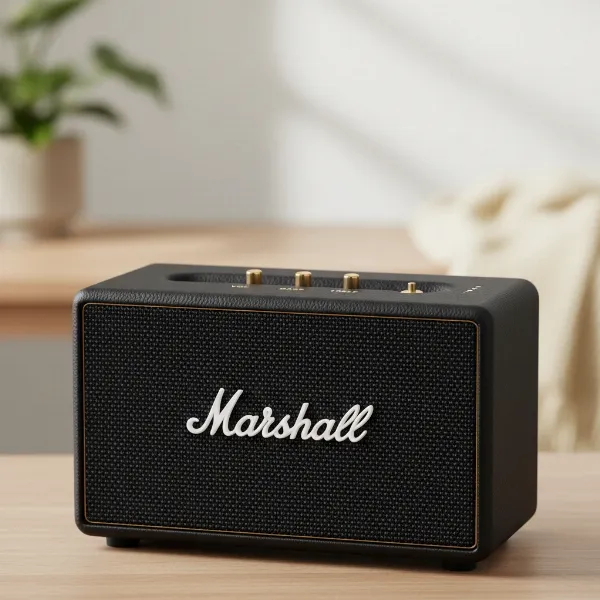 Marshall Uxbridge Voice smart speaker showcasing its iconic amplifier-inspired design with front grille and brass controls.
Unpacking the Smart Features and Connectivity
The Marshall Uxbridge Voice integrates smart capabilities seamlessly, making it more than just a stylish speaker. It comes in two variants, offering either Amazon Alexa or Google Assistant built-in, allowing users to choose their preferred voice ecosystem.
The speaker is equipped with far-field microphones that effectively pick up voice commands, even when music is playing at moderate volumes [1, 4 (from sound quality search)]. This enables hands-free control for playing music, checking the weather, setting alarms, and managing compatible smart home devices. For privacy, a dedicated mic mute button allows you to instantly cut power to the microphones [2 (from features search)].
In terms of connectivity, the Uxbridge Voice is well-appointed for modern streaming needs. It supports Wi-Fi, Apple AirPlay 2, and Spotify Connect, facilitating high-quality wireless streaming from various devices and services. Bluetooth 4.2 connectivity is also available for direct pairing with smartphones or tablets [1, 2 (from features search), 3 (from features search)]. A key feature for expanding your audio experience is its multi-room audio capability, allowing you to link it with other compatible Alexa or AirPlay 2 enabled speakers to play the same audio across multiple rooms [1 (from features search)].
However, it’s important to note some limitations. The Uxbridge Voice is not portable; it requires a constant connection to a power outlet, lacking a built-in rechargeable battery [3 (from sound quality search), 4 (from comparison search)]. Furthermore, it lacks a 3.5mm auxiliary input, meaning there are no options for wired physical connections [5 (from comparison search)]. This design choice prioritizes a clean, wireless setup but might be a drawback for users who prefer analog inputs.
Audio Performance: The Marshall Sound in a Compact Form
Marshall has a long-standing reputation for powerful audio, and the Uxbridge Voice aims to deliver that signature sound in a compact smart speaker. Equipped with a woofer and a tweeter, powered by a 30W Class D amplifier, it produces a surprisingly robust sound for its size [1 (from comparison search), 2 (from comparison search)].
Many reviews highlight a rich bass depth and crisp, clear highs, resulting in a warm and full sound that can easily fill a small to medium-sized room [1, 2, 4 (from sound quality search), 5 (from sound quality search)]. The speaker’s ability to get loud is also frequently praised, often reaching volumes that are impressive for its compact footprint [4 (from sound quality search), 5 (from sound quality search)]. The physical bass and treble rocker controls on the top panel are a significant advantage, providing instant sound customization. For more nuanced adjustments, the companion Marshall Voice app offers a five-band adjustable EQ and various preset music genres like Rock, Metal, Pop, and Jazz [1, 2 (from features search), 5 (from sound quality search)].
However, the audio performance isn’t without its caveats. The Uxbridge Voice operates in mono, which means it doesn’t offer a wide or spacious stereo soundstage [1, 5 (from comparison search)]. Some critics suggest that while the bass is present, it can sometimes lack agility and deep extension, and the mid-frequencies might feel less rich in certain tracks [1 (from comparison search), 2 (from comparison search)]. At higher volumes, digital signal processing (DSP) can significantly sculpt the mix, and some sources note a potential for harshness or a slight loss of clarity [1, 2 (from comparison search), 5 (from comparison search)]. While it’s a significant upgrade over basic smart speakers, it might not satisfy audiophiles seeking pristine, uncolored sound or intricate dynamic range.
“The Uxbridge Voice is a small speaker that kicks out big sound. I’ve noticed that the Uxbridge Voice tends to favor the low-end with powerful bass, and I don’t mind that one bit. It’s surprising that a speaker this small can sound so impactful, but it does.” – Adam Doud, Senior Reviewer at Android Central [5 (from sound quality search)]
User Experience and Daily Living with the Uxbridge Voice
Living with the Marshall Uxbridge Voice is generally a positive experience, thanks to its intuitive controls and robust smart features. Setting up the speaker is straightforward using the Marshall Voice app, which guides you through Wi-Fi connection and voice assistant integration. Once configured, the app also provides options for firmware updates and the advanced EQ settings [3 (from features search)].
The physical rocker controls for volume, bass, and treble are a highlight. They offer a tactile and satisfying way to adjust audio settings directly on the speaker, a convenience often lacking in competitors that rely solely on app-based controls. While making subtle volume tweaks can sometimes be tricky due to the size of the increments, the ability to quickly dial in your preferred bass and treble levels is highly appreciated [4 (from comparison search)].
The far-field microphones are generally effective, allowing for hands-free voice commands even when music is playing. While some reviews mention a slight delay in Alexa’s response compared to native Echo devices or Sonos One, it’s usually a matter of a second or so and improves with firmware updates [2 (from comparison search)]. The voice assistant reliably handles requests for music playback, information, and smart home control, making daily interactions smooth.
The compact size makes the Uxbridge Voice versatile in terms of placement. It fits comfortably on desks, bedside tables, or kitchen shelves, integrating well into various home environments [4 (from sound quality search)]. It’s best suited as a dedicated indoor smart speaker, offering a blend of connectivity and sound that enhances everyday listening and smart home convenience.
Marshall Uxbridge Voice Against the Competition
The smart speaker market is highly competitive, and the Marshall Uxbridge Voice faces strong rivals. Here’s how it stacks up against some popular alternatives:
Comparison Table: Top Smart Speakers
| Model | Pros | Cons | Price (Approx.) |
|---|---|---|---|
| Marshall Uxbridge Voice | Iconic design, physical EQ controls, rich bass, AirPlay 2, Spotify Connect, multi-room audio, Alexa/Google Assistant options. | Mono audio, not portable, no AUX input, sound can lack depth/clarity at high volumes, sometimes slower voice assistant response. | $199 – $219 |
| Sonos One (Gen 2) | Excellent stereo sound when paired, robust multi-room ecosystem, superior voice assistant integration, durable build. | Less distinctive design, EQ only via app, higher price for stereo pair. | $219 |
| Amazon Echo Studio | Powerful Dolby Atmos sound, integrated smart home hub, great for Amazon Music HD, can pair with Fire TV. | Less stylish, larger footprint, sound profile might be overly aggressive for some. | $199 |
| Google Nest Audio / Amazon Echo (4th Gen) | Affordable, good voice assistant performance, decent sound for the price, seamless ecosystem integration. | Sound quality not as refined as Uxbridge, less distinctive design, fewer physical controls. | $99 – $119 |
Detailed Comparison Points:
- Marshall Uxbridge Voice vs. Sonos One: The Uxbridge Voice excels in design and immediate physical sound control. Its bass is punchy, and its aesthetic is unique. However, the Sonos One generally offers a more refined audio experience, especially when two are paired for stereo sound, and boasts a more seamless voice assistant integration. The choice often comes down to prioritizing iconic design and physical controls (Marshall) versus audio fidelity and a polished ecosystem (Sonos) [1 (from comparison search), 2 (from comparison search), 5 (from comparison search)].
- Marshall Uxbridge Voice vs. Amazon Echo Studio: The Echo Studio is designed for power and immersive audio, particularly with its Dolby Atmos capabilities and smart home hub features. It generally offers a louder and more dynamic sound. The Uxbridge Voice, while good for its size, cannot match the sheer output or soundstage of the Studio. However, the Marshall speaker’s design is far more distinctive and appealing for those seeking a retro aesthetic [3 (from comparison search)].
- Marshall Uxbridge Voice vs. Google Nest Audio / Amazon Echo (4th Gen): These mainstream smart speakers are often more affordable and provide solid voice assistant performance and decent sound for casual listening. The Uxbridge Voice, positioned at a slightly higher price point, delivers a more premium build and a noticeably richer, louder sound quality for its size, making it a step up in audio performance while retaining smart features [4 (from comparison search)].
Key Considerations Before You Buy
Choosing the right smart speaker involves balancing several factors to match your personal needs and preferences. When considering the Marshall Uxbridge Voice, keep these points in mind:
- Design and Aesthetic Preference: If the iconic Marshall amplifier design appeals to you, the Uxbridge Voice stands out significantly from the crowd. It serves as a statement piece that blends retro charm with modern technology.
- Sound Priority: For its compact size, the Uxbridge Voice offers impressive sound with good bass and adjustable EQ. However, if uncompromised audiophile-grade sound, particularly stereo separation and expansive soundstage, is your absolute top priority, you might find other options like a stereo pair of Sonos Ones or a larger, dedicated audio system more suitable.
- Portability Needs: It’s crucial to remember that the Uxbridge Voice is not a portable speaker. It requires a constant power connection, so if you need a speaker to move freely between rooms or take outdoors, Marshall’s dedicated portable Bluetooth speakers would be a better choice.
- Voice Assistant Ecosystem: The Uxbridge Voice comes in dedicated Alexa or Google Assistant versions. Ensure you choose the model that integrates best with your existing smart home devices and preferred voice assistant ecosystem.
- Connectivity Demands: While it offers AirPlay 2, Spotify Connect, and Bluetooth, the absence of an auxiliary input means all connections are wireless. This might be a limiting factor if you rely on wired connections for specific audio sources.
- Budget: Priced around $200, it sits in a competitive segment. While its unique design and sound quality for its size offer good value, comparing its features and limitations against similarly priced smart speakers is essential.
Conclusion
The Marshall Uxbridge Voice is a smart speaker that dares to be different. It successfully marries Marshall’s legendary design heritage with the convenience of modern voice assistants, offering a unique blend of style and functionality. Its compact form factor, surprisingly rich bass, and intuitive physical controls for bass and treble make it a compelling choice for those seeking a distinctive smart speaker. While it operates in mono, lacks portability, and its sound might not satisfy the most discerning audiophiles at peak volumes, it delivers a rewarding audio experience with reliable smart features for everyday listening.
If you’re a fan of the classic Marshall aesthetic and want a smart speaker that makes a visual statement while delivering a punchy, customizable sound for your home, the Uxbridge Voice is an excellent option. It carves out its niche as a stylish, sound-conscious smart speaker that stands apart from the minimalist mainstream. Could the Marshall Uxbridge Voice be the perfect blend of retro cool and smart convenience for your living space?
Frequently Asked Questions
What smart assistants does the Marshall Uxbridge Voice support?
The Marshall Uxbridge Voice is available in two distinct versions: one supporting Amazon Alexa and another supporting Google Assistant. You need to choose the model with your preferred voice assistant when purchasing, as they are separate devices.
Can the Marshall Uxbridge Voice be used for multi-room audio?
Yes, the Marshall Uxbridge Voice supports multi-room audio playback. You can integrate it with other compatible smart speakers that support either Apple AirPlay 2 or Amazon Alexa’s multi-room music features, allowing you to synchronize music across various rooms in your home.
Is the Marshall Uxbridge Voice portable?
No, the Marshall Uxbridge Voice is not a portable speaker. It does not have a built-in battery and requires continuous connection to a power outlet to function. It is designed as a stationary Smart Speaker for indoor use.