Connecting smart lights to your Amazon Echo doesn’t always require a separate hub. While some traditional smart lighting systems rely on a dedicated bridge or hub to communicate, many modern smart bulbs and light strips are designed to connect directly to your Echo device or home Wi-Fi network, simplifying your smart home setup. This guide will walk you through the various methods and considerations for integrating smart lights with your Echo without the need for an additional hub, allowing you to enjoy voice control and smart automation with ease.
Understanding Hub-less Smart Light Connectivity
Many homeowners are looking for ways to streamline their smart home ecosystems, and eliminating unnecessary hubs is a common goal. Fortunately, advancements in smart lighting technology and Amazon Echo capabilities make hub-less connections increasingly accessible.
What is a Smart Speaker and How Does It Work with Lights?
|
Our Picks for the Best Smart Speaker in 2026
As an Amazon Associate I earn from qualifying purchases.
|
||
| Num | Product | Action |
|---|---|---|
| 1 | Belkin SOUNDFORM Elite Hi-Fi Smart Speaker + Wireless Charger (Alexa Voice-Controlled Bluetooth Speaker) Sound Technology By Devialet, Fast Wireless Charging for iPhone, Samsung Galaxy & More - White |

|
| 2 | Bluetooth Speaker with HD Sound and Lights, Portable Wireless, Long-lasting battery life, TWS Pairing, for Home/Party/Outdoor/Travel/Beach, Stocking Stuffers, White Elephant Gifts for Adults (Black) |
|
| 3 | Bluetooth Speaker with HD Sound, Portable Wireless, IPX5 Waterproof, Up to 20H Playtime, TWS Pairing, BT5.3, for Home/Party/Outdoor/Beach, Electronic Gadgets, Birthday Gift (Black) |
|
| 4 | Portable Bluetooth Speaker Valentines Gifts For Him: Powerful Crystal Clear Sound/Romantic Light/IPX5 Waterproof/All Day Playtime/BT 5.3/TWS Paring,Small Wireless Speaker for Outdoor-Travel-Date Night |
|
| 5 | Mini Bluetooth Speaker, Smart Wireless Portable Speaker with Touchscreen, Loud HD Sound, LED Lights, BT5.4, All In One Small Audio for Home/Outdoor/Travel/Shower/Party/Beach/Camping/Hiking/Cycling |
|
| 6 | Google Audio Bluetooth Speaker - Wireless Music Streaming, Powerful Sound, Assistant Built-in, Wi-Fi and Bluetooth Connectivity, Smart Home Control, Stereo Pairing - Chalk |
|
| 7 | WiiM Sound Lite Smart Speaker, Hi‑Res 24‑bit/192 kHz, AI RoomFit™ Room Correction, 100W Peak, Wi‑Fi 6E/Bluetooth 5.3, Multi‑Room & Stereo Pairing, Black |
|
| 8 | Sonos Era 100 - White - Wireless, Alexa Enabled Smart Speaker |
|
| 9 | aowoka Bluetooth Speaker, 2025 Portable Wireless Speakers with Led Light, Bluetooth 5.4, 24H Playtime, Enhanced Bass, IPX7 Waterproof, Outdoor Speaker for Travel, Sport, Party, Biking. |
|
| 10 | Sony SRS-XB100 Wireless Bluetooth Portable Lightweight Super-Compact Travel Speaker, Durable IP67 Waterproof & Dustproof Shower Speaker, 16 Hour Battery, Versatile Strap, & Hands-free Calling, Black |
|
A smart speaker, like an Amazon Echo, is a voice-controlled device that acts as a central control point for your smart home. When connected to compatible smart lights, it allows you to issue voice commands to turn lights on/off, adjust brightness, change colors, and even set schedules. The Echo achieves this by communicating with your smart lights through various wireless protocols, often leveraging its own built-in capabilities or integrating with the lights’ native connectivity.
Evolution of Smart Light Connectivity
In the early days of smart lighting, a dedicated bridge or hub was almost always necessary to translate commands between your Smart Speaker and the lights. Companies like Philips Hue pioneered smart lighting but required their own Hue Bridge. Over time, manufacturers began integrating Wi-Fi and Bluetooth directly into bulbs, allowing them to connect without an external hub. More recently, Amazon has incorporated Zigbee radios into some Echo devices, enabling direct connection to Zigbee-compatible lights. The emergence of new universal standards like Matter further promises even more seamless integration.
Popular Smart Light Brands Offering Hub-less Solutions
Several reputable brands offer smart lights that can connect to Amazon Echo devices without a dedicated hub. These typically fall into two main categories: Wi-Fi-enabled lights and Zigbee-enabled lights that work with compatible Echo devices. Brands known for hub-less options include Philips Hue (newer Bluetooth models), TP-Link Kasa, Govee, Wyze, Sengled, and Amazon’s own Smart Bulbs.
Types of Smart Light Connectivity for Echo Without a Hub
Connecting smart lights directly to your Echo device primarily involves two main wireless protocols: Wi-Fi and Zigbee, along with Bluetooth for some specific bulbs and the emerging Matter standard. Understanding these methods is key to a successful hub-less setup.
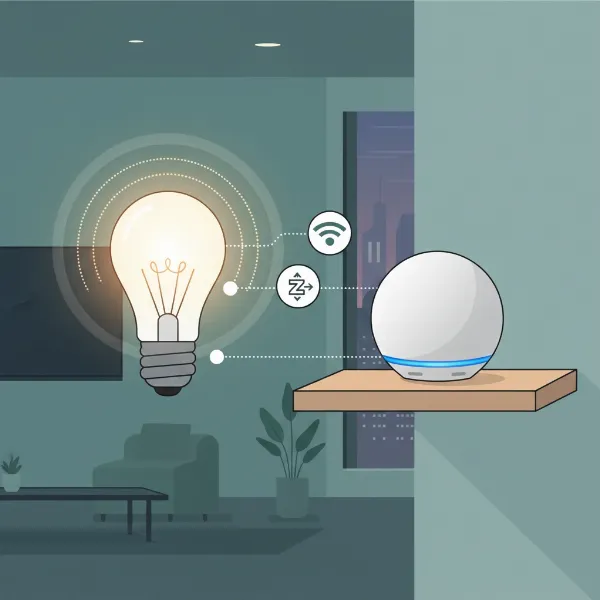 Smart light bulb connecting directly to an Echo device, illustrating Wi-Fi and Zigbee protocols with ambient smart home lighting.
Wi-Fi Smart Lights
Wi-Fi smart lights connect directly to your existing home Wi-Fi network. Once connected, the manufacturer’s app usually links to their cloud service, and an Alexa skill bridges this service to your Echo. This allows Alexa to control the lights via your Wi-Fi router.
- How they work: The smart light bulb has a built-in Wi-Fi chip that connects to your home’s 2.4GHz Wi-Fi network.
- Setup process:
- Screw in the smart bulb and turn it on.
- Download the manufacturer’s app (e.g., Kasa, Govee, Wyze).
- Follow the app’s instructions to connect the bulb to your Wi-Fi network.
- Open the Alexa app, go to “Skills & Games,” and search for the light manufacturer’s skill.
- Enable the skill and link your manufacturer account if prompted.
- Ask Alexa to “Discover devices” or tap the “Discover Devices” button in the Alexa app.
- Pros: No additional hardware needed beyond your existing Wi-Fi router. Widely available and often affordable.
- Cons: Can sometimes be prone to Wi-Fi congestion if you have many devices. Might require a separate app for initial setup and advanced features.
Zigbee Smart Lights (with Built-in Echo Hub)
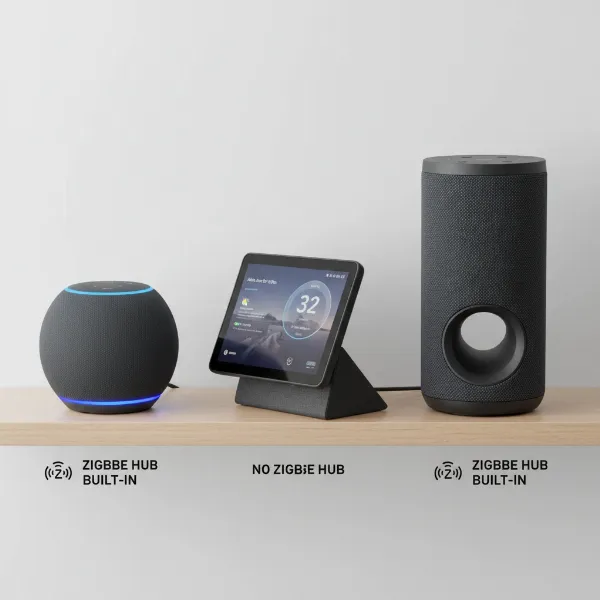
Certain Amazon Echo models come with a built-in Zigbee hub, allowing them to communicate directly with Zigbee-enabled smart lights. This eliminates the need for a separate Zigbee bridge.
- Compatible Echo devices:
- Echo (4th Generation)
- Echo Plus (all generations)
- Echo Studio (1st Gen and new 2nd Gen)
- Echo Show 10 (2nd and 3rd Generation)
- Echo Show 15
- How they work: These Echo devices have an integrated Zigbee radio that acts as a bridge, allowing direct local control of Zigbee bulbs without an internet connection (once initially set up).
- Setup process:
- Screw in the Zigbee smart bulb and turn it on.
- Place the bulb within range of your compatible Echo device.
- Say, “Alexa, discover my devices,” or navigate to “Devices” in the Alexa app, tap the “+” icon, and select “Add Device,” then choose “Light.”
- Alexa will search for and connect to the Zigbee bulb directly.
- Pros: Local control (less reliance on internet/cloud), generally more responsive and reliable. Reduces Wi-Fi traffic.
- Cons: Requires a specific Echo model with a built-in Zigbee hub. Not all smart lights are Zigbee-compatible.
Bluetooth Smart Lights
Some newer smart lights, particularly certain Philips Hue bulbs, offer Bluetooth connectivity. This allows for direct control from your smartphone or an Echo device within close range, bypassing a hub for basic functions.
- How they work: Bluetooth bulbs connect directly to your Echo device using a Bluetooth connection.
- Setup process:
- Screw in the Bluetooth-enabled smart bulb and turn it on.
- Place it within Bluetooth range of your Echo device.
- Open the Alexa app, go to “Devices,” tap the “+” icon, select “Add Device,” and choose “Light.” The Alexa app will guide you to connect via Bluetooth.
- Pros: Easy initial setup, good for single-bulb setups or small areas.
- Cons: Limited range, fewer features available compared to hub-based or Wi-Fi connections, and can be less reliable for whole-home solutions.
Matter-Enabled Smart Lights
Matter is a new, unified smart home connectivity standard designed to simplify device setup and interoperability across different ecosystems. Many new smart lights and Echo devices are becoming Matter-compatible.
- How they work: Matter-enabled lights can be set up directly with Matter controllers (like newer Echo devices) without needing manufacturer-specific apps or skills, offering truly seamless integration.
- Setup process: Typically involves scanning a QR code or entering a numerical code during the setup process in the Alexa app.
- Pros: Future-proof, excellent interoperability, simplified setup, enhanced security.
- Cons: Still relatively new, so device availability might be limited compared to Wi-Fi or Zigbee.
Step-by-Step Guide: Connecting Smart Lights to Your Echo Without a Hub
Connecting your smart lights to your Amazon Echo without a dedicated hub is a straightforward process, but the exact steps can vary slightly depending on whether your lights are Wi-Fi or Zigbee enabled.
Preparing for Connection
Before you begin, ensure you have the following:
- An Amazon Echo device (check if it has a built-in Zigbee hub if you’re using Zigbee lights).
- Your smart light bulbs or strips.
- A stable 2.4GHz Wi-Fi network (most smart devices do not support 5GHz for initial pairing).
- The Alexa app installed on your smartphone or tablet.
- The manufacturer’s app for your smart lights (if they are Wi-Fi enabled).
General Connection Procedure (Wi-Fi Lights)
For Wi-Fi smart lights, the process usually involves setting up the light with its own app first, then linking it to Alexa.
- Install the Smart Light: Screw your smart bulb into a lamp or fixture, or plug in your smart light strip. Turn on the power. The light should enter a pairing mode (often indicated by blinking).
- Download Manufacturer App: Download and install the specific app for your smart light brand (e.g., Kasa Smart, Govee Home, Wyze app).
- Connect Light to Wi-Fi: Open the manufacturer’s app and follow the on-screen instructions to add your new smart light. This typically involves selecting your 2.4GHz Wi-Fi network and entering your password.
- Enable Alexa Skill: Open the Amazon Alexa app. Navigate to “More” (bottom right), then “Skills & Games.” Search for the brand of your smart light (e.g., “Kasa Smart”). Tap “Enable to Use.” You may need to log into your manufacturer account to link it.
- Discover Devices: Once the skill is enabled, Alexa will usually prompt you to discover devices. If not, you can say, “Alexa, discover devices,” or go to “Devices” in the Alexa app, tap the “+” icon, and then “Add Device.” Choose “Light” and follow the prompts. Your Wi-Fi light should appear.
- Name and Control: Give your light a memorable name (e.g., “Living Room Lamp,” “Kitchen Lights”). You can then control it with voice commands like, “Alexa, turn on Living Room Lamp.”
General Connection Procedure (Zigbee Lights with Compatible Echo)
If you have an Echo device with a built-in Zigbee hub and Zigbee-enabled smart lights, the process is even simpler.
- Install the Smart Light: Screw in your Zigbee smart bulb or plug in your smart light. Ensure it’s powered on.
- Place within Range: Make sure the smart light is within a reasonable range of your compatible Amazon Echo device.
- Initiate Discovery: Say, “Alexa, discover devices,” or open the Alexa app, go to “Devices,” tap the “+” icon, and select “Add Device.” Choose “Light” and follow the on-screen instructions.
- Automatic Connection: Your Echo device will scan for Zigbee devices and should automatically detect and connect to your smart light.
- Name and Control: Once discovered, name your light in the Alexa app. You can now use voice commands to control it.
Troubleshooting Common Connection Issues
Sometimes, connecting smart lights can be tricky. Here are some common issues and their solutions:
- Light Not Discovering:
- Ensure the light is in pairing mode (often blinking or pulsing). You might need to turn it on/off a few times to reset it to pairing mode (check the manufacturer’s instructions).
- Verify your Echo device is online and updated.
- Make sure your phone and Echo are on the same 2.4GHz Wi-Fi network during initial setup.
- Move the light closer to your Echo or Wi-Fi router.
- “No new devices found”:
- Double-check that you’ve enabled the correct Alexa skill for Wi-Fi lights.
- For Zigbee lights, confirm your Echo device has a built-in Zigbee hub.
- Try factory resetting the smart light (refer to the manufacturer’s guide).
- Limited Control:
- Some advanced features (like intricate color scenes) might only be accessible through the manufacturer’s app, even if basic controls work via Alexa.
- Ensure the Alexa skill is fully linked to your manufacturer account.
Optimizing Your Hub-less Smart Light Experience
Once