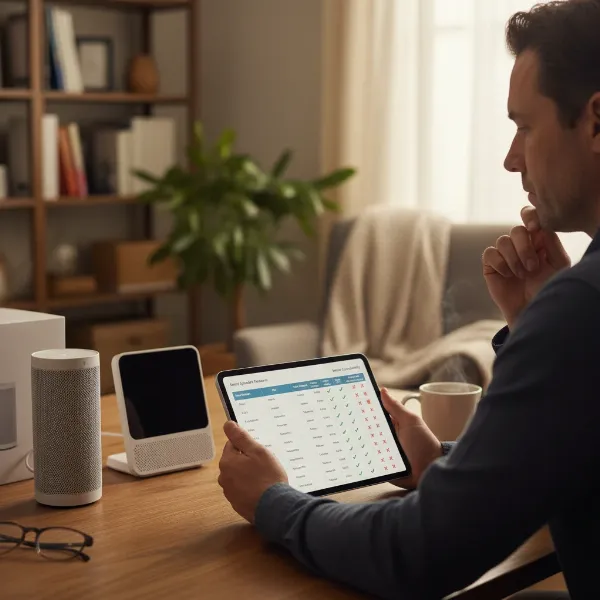
In today’s fast-paced world, getting everyone’s attention across a bustling home can feel like an Olympic sport. Shouting from the kitchen that dinner is ready, or trying to relay an urgent message to someone in a distant bedroom, often results in frustration or simply being ignored. Fortunately, the evolution of smart home technology, particularly smart speakers, has ushered in a seamless solution: broadcasting messages to every corner of your house with just your voice. This innovative feature transforms your smart speakers into a sophisticated intercom system, making household communication effortless and efficient.
The Rise of Smart Home Communication
What are Smart Speaker Broadcast Features?
|
Our Picks for the Best Smart Speaker in 2026
As an Amazon Associate I earn from qualifying purchases.
|
||
| Num | Product | Action |
|---|---|---|
| 1 | Belkin SOUNDFORM Elite Hi-Fi Smart Speaker + Wireless Charger (Alexa Voice-Controlled Bluetooth Speaker) Sound Technology By Devialet, Fast Wireless Charging for iPhone, Samsung Galaxy & More - White |

|
| 2 | Bluetooth Speaker with HD Sound and Lights, Portable Wireless, Long-lasting battery life, TWS Pairing, for Home/Party/Outdoor/Travel/Beach, Stocking Stuffers, White Elephant Gifts for Adults (Black) |
|
| 3 | Portable Bluetooth Speaker Valentines Gifts For Him: Powerful Crystal Clear Sound/Romantic Light/IPX5 Waterproof/All Day Playtime/BT 5.3/TWS Paring,Small Wireless Speaker for Outdoor-Travel-Date Night |
|
| 4 | WiiM Sound Lite Smart Speaker, Hi‑Res 24‑bit/192 kHz, AI RoomFit™ Room Correction, 100W Peak, Wi‑Fi 6E/Bluetooth 5.3, Multi‑Room & Stereo Pairing, Black |
|
| 5 | Sonos Era 100 - White - Wireless, Alexa Enabled Smart Speaker |
|
| 6 | Mini Bluetooth Speaker, Smart Wireless Portable Speaker with Touchscreen, Loud HD Sound, LED Lights, BT5.4, All In One Small Audio for Home/Outdoor/Travel/Shower/Party/Beach/Camping/Hiking/Cycling |
|
| 7 | Google Audio Bluetooth Speaker - Wireless Music Streaming, Powerful Sound, Assistant Built-in, Wi-Fi and Bluetooth Connectivity, Smart Home Control, Stereo Pairing - Chalk |
|
| 8 | Bluetooth Speaker with HD Sound, Portable Wireless, IPX5 Waterproof, Up to 20H Playtime, TWS Pairing, BT5.3, for Home/Party/Outdoor/Beach, Electronic Gadgets, Birthday Gift (Black) |
|
| 9 | Sony SRS-XB100 Wireless Bluetooth Portable Lightweight Super-Compact Travel Speaker, Durable IP67 Waterproof & Dustproof Shower Speaker, 16 Hour Battery, Versatile Strap, & Hands-free Calling, Black |
|
| 10 | aowoka Bluetooth Speaker, 2025 Portable Wireless Speakers with Led Light, Bluetooth 5.4, 24H Playtime, Enhanced Bass, IPX7 Waterproof, Outdoor Speaker for Travel, Sport, Party, Biking. |
|
Smart speaker broadcast features allow you to send one-way audio messages from one smart speaker (or your smartphone app) to all other compatible smart speakers and smart displays within your home. Imagine a modern public address system, but built directly into your smart home ecosystem, responding to your voice commands. This functionality is a game-changer for families, offering unparalleled convenience in relaying information quickly and effectively. It eliminates the need to traverse rooms or raise your voice, ensuring important announcements or simple reminders reach everyone simultaneously.
The concept of in-home communication systems isn’t new; traditional wired intercoms have existed for decades. However, smart speakers have democratized and modernized this capability, integrating it into devices many homes already use for music, information, and smart device control. This seamless integration means no new hardware installation beyond your existing smart speaker setup, making it an accessible upgrade for virtually any smart home.
Popular Smart Speaker Platforms for Broadcasting
The two titans of the smart speaker market, Google Assistant and Amazon Alexa, both offer robust broadcasting capabilities, each with its unique commands and setup nuances. Understanding how each platform works is key to maximizing your in-home communication efficiency.
Google Assistant (Google Home/Nest devices)
Google Assistant-enabled devices, including Google Home speakers and Nest Hub smart displays, provide a straightforward way to broadcast messages. You can use simple voice commands to send your message to all connected devices in your home. This feature is particularly useful for general announcements, turning your smart home into a truly interconnected communication hub.
To broadcast, simply start with “Hey Google,” followed by a broadcast command and your message. For instance, you could say, “Hey Google, broadcast ‘Dinner is ready!’” or “Hey Google, announce ‘Time to leave for school.’” Other commands like “Shout” or “Tell everyone” also work. Google Assistant is designed to make these interactions intuitive, ensuring your message is heard loud and clear throughout the house.
For managing broadcasts and selecting specific devices, the Google Home app is your central control panel. Navigate to Settings > Communication > Broadcast to enable personal broadcasts and choose which speakers and smart displays will receive messages. You can also specify a target room or device when making an announcement, such as, “Hey Google, broadcast to the living room, ‘The movie is starting in five minutes.’” This granular control allows for more private or targeted communications without disturbing the entire household.
Amazon Alexa (Amazon Echo devices)
Amazon Echo devices, powered by Alexa, offer similar communication features, primarily through “Announcements” and a related function called “Drop In.” Alexa Announcements function much like Google’s broadcast, sending a one-way message to all compatible Echo devices in your household.
To make an announcement, say, “Alexa, announce ‘The bus is here!’” or “Alexa, broadcast ‘Please come downstairs.’” All Echo devices will play a chime followed by your spoken message. For those with Echo Show devices, the message can also appear as text on the screen, adding a visual cue to the audio announcement.
Alexa also features “Drop In,” which is a two-way intercom function. While not a broadcast in the traditional one-way sense, “Drop In” allows you to instantly connect to a specific Echo device in another room and have a live conversation. To use it, you might say, “Alexa, drop in on the kids’ room.” Before using “Announce” or “Drop In,” you typically need to enable these communication features in the Alexa app. Go to the Communicate tab, then Contacts, and finally My Communication Settings to ensure “Allow Drop In” is enabled. This ensures your devices are ready for seamless in-home conversations.
Setting Up Your Smart Speaker Broadcast System
Setting up an effective smart speaker broadcast system involves a few key steps, ensuring all your devices are configured for optimal in-home communication.
Initial Setup (General)
- Unbox and Power On: Start by unboxing your smart speakers and displays and plugging them into power outlets.
- Connect to Wi-Fi: Download the respective app (Google Home for Google devices, Amazon Alexa for Echo devices) on your smartphone. Follow the in-app instructions to connect each device to your home’s Wi-Fi network. Ensure all devices are on the same network for them to communicate seamlessly.
- Assign to Rooms: Within the app, assign each smart speaker or display to its designated room (e.g., “Living Room,” “Kitchen,” “Bedroom”). This organization is crucial for managing and targeting broadcasts.
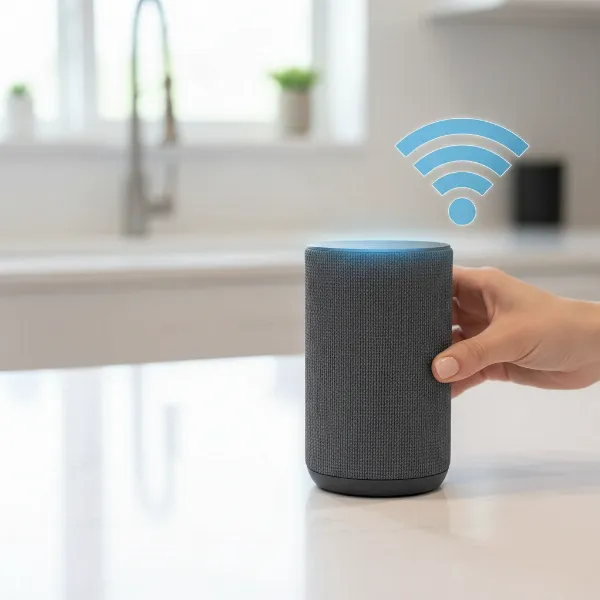 A hand setting up a smart speaker on a modern countertop, connecting to a home Wi-Fi network for broadcasting messages.
Enabling Broadcasts
The process for enabling broadcasts is slightly different for each platform:
- For Google Assistant: Open the Google Home app, tap on Settings, then navigate to Communication, and finally Broadcast. Here, you can verify that broadcasts are enabled and select which devices are included in your home’s broadcast network.
- For Amazon Alexa: Launch the Amazon Alexa app, tap the Communicate icon at the bottom. Go to Contacts (the person icon), select My Profile & Settings, and toggle Allow Drop In to the “on” position. While “Announce” typically works without this, enabling Drop In ensures full intercom functionality, including the ability to communicate with specific rooms.
Advanced Tips for Seamless In-Home Communication
Once your smart speaker broadcast system is operational, a few best practices can further enhance your experience and avoid common pitfalls.
Best Practices for Broadcasting
- Keep Messages Clear and Concise: Since broadcasts are one-way, aim for short, direct messages. “Dinner’s ready!” is more effective than a lengthy explanation.
- Consider Timing: Be mindful of when you broadcast. Avoid disruptive announcements during quiet times or when someone might be sleeping, unless it’s an emergency.
- Manage Volume Settings: Ensure the volume on your smart speakers is appropriate for all rooms. You might want to adjust the default announcement volume in your app settings, or tell your voice assistant “Hey Google/Alexa, set announcement volume to 5” after an announcement.
- Privacy Considerations: While broadcasts are internal, be aware that any message spoken will be heard by anyone near a receiving device. For sensitive conversations, consider alternative communication methods.
> “Smart speakers have truly revolutionized home communication, transforming once-noisy shout-fests into organized, voice-activated announcements. It’s not just about convenience; it’s about making our homes more connected and efficient.” – Alex Chen, Smart Home Integration Specialist
Troubleshooting Common Broadcast Issues
Even with the best setup, you might encounter occasional hiccups. Here’s how to address them:
- Devices Not Responding: First, ensure all devices are powered on and connected to the same Wi-Fi network. Sometimes, a simple restart of the device or your Wi-Fi router can resolve connectivity issues.
- Message Not Heard: Check the volume settings on individual speakers. If a device is muted or set to a very low volume, your broadcast might not be audible. Also, confirm the device is correctly assigned to your home group in the app.
- Wi-Fi Connectivity: A strong and stable Wi-Fi signal is paramount for smart speaker functionality. If your devices are far from your router, consider Wi-Fi extenders or mesh systems to improve coverage.
- App Settings: Double-check your Google Home or Alexa app settings to ensure broadcasting/communication features are enabled for all desired devices. Firmware updates can sometimes reset these preferences.
Comparing Smart Speaker Broadcasting Capabilities
Here’s a quick comparison of the key broadcasting features offered by Google Assistant and Amazon Alexa:
| Feature/Platform | Google Assistant | Amazon Alexa |
|---|---|---|
| Primary Broadcast Command | “Broadcast,” “Announce,” “Shout,” “Tell everyone” | “Announce,” “Broadcast” |
| Two-Way Intercom Feature | Responses can be made via voice (e.g., “Reply”) | “Drop In” (direct two-way conversation) |
| Targeted Room Broadcast | Yes (“Broadcast to [room name] [message]”) | Yes (via “Drop In” to specific room/device) |
| Setup via App | Google Home App | Amazon Alexa App |
| Devices Supported | Google Home, Nest Speakers/Displays/Clocks | Amazon Echo, Echo Show, Echo Dot |
Conclusion
Broadcasting messages to all rooms in your house using smart speakers is a testament to the ever-growing convenience and connectivity of modern smart homes. Whether you’re reminding the kids to start their homework, calling everyone for dinner, or simply sharing a thought, these systems offer an intuitive and efficient alternative to traditional shouting or physically tracking down family members. By leveraging the power of Google Assistant or Amazon Alexa, you transform your collection of smart devices into a unified communication network, fostering a more harmonious and responsive living environment.
Are you ready to silence the shouts and embrace seamless voice communication throughout your home?
Frequently Asked Questions
Can I broadcast from my phone if I don’t have a smart speaker nearby?
Yes, absolutely! Both the Google Home app and the Amazon Alexa app allow you to initiate broadcasts directly from your smartphone, regardless of your proximity to a smart speaker. This means you can send messages to your home even when you’re not physically there, which is a fantastic feature for remote communication.
Do all smart speakers support broadcasting?
The vast majority of Google Assistant-enabled devices (Google Home, Nest speakers/displays) and Amazon Echo devices (Echo, Echo Dot, Echo Show) support broadcasting or announcement features. However, it’s always good to confirm the specific model’s capabilities if you have an older or less common Smart Speaker.
What’s the difference between “broadcast” and “drop in”?
“Broadcast” (or “Announce” on Alexa) is typically a one-way message sent to multiple speakers at once, like a public announcement. “Drop In” (exclusive to Alexa) is a two-way, real-time audio connection established between two specific Echo devices, acting more like an intercom where you can have a live conversation.
Can I reply to a broadcast message?
On Google Assistant devices, after a broadcast, you can typically say “Hey Google, reply [your message]” to send a response back to the device that initiated the broadcast. For Alexa, while “Announce” is one-way, “Drop In” allows for immediate two-way conversation.
Is it possible to broadcast to specific rooms only?
Yes, both Google Assistant and Amazon Alexa offer ways to target specific rooms or devices. With Google Assistant, you can say, “Hey Google, broadcast to [room name] [message].” For Alexa, while “Announce” is house-wide, you can use “Drop In” to connect to a specific room’s Echo device for targeted, two-way communication.