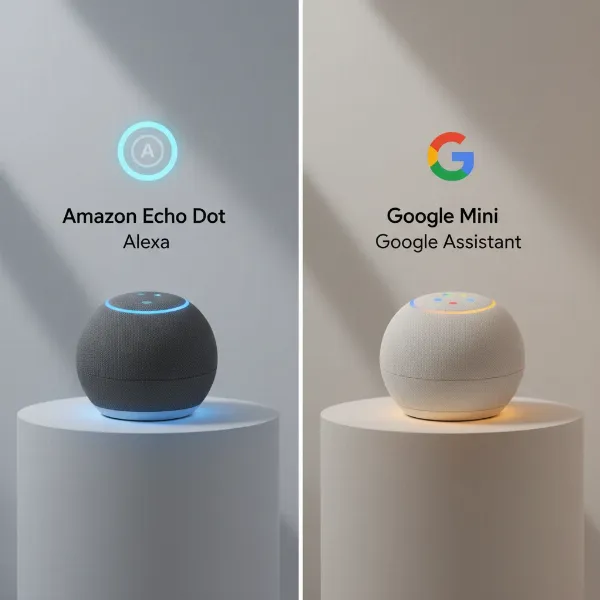
Have you ever wondered if that compact, unassuming smart speaker on your nightstand or kitchen counter could actually be the hub of your connected home? In an increasingly smart world, the Amazon Echo Dot 5th Gen promises to deliver big functionality in a small package. But with so many options available, is this latest iteration from Amazon truly the best small smart speaker on the market, or merely another incremental update? Let’s dive deep into its capabilities, sound, and overall value to help you decide if it’s the perfect fit for your smart living space.
Popular Smart Speaker Types on the Market
Overview of Smart Speakers
|
Our Picks for the Best Smart Speaker in 2026
As an Amazon Associate I earn from qualifying purchases.
|
||
| Num | Product | Action |
|---|---|---|
| 1 | Google Audio Bluetooth Speaker - Wireless Music Streaming, Powerful Sound, Assistant Built-in, Wi-Fi and Bluetooth Connectivity, Smart Home Control, Stereo Pairing - Chalk |

|
| 2 | Sonos Era 100 - White - Wireless, Alexa Enabled Smart Speaker |
|
| 3 | Mini Bluetooth Speaker, Smart Wireless Portable Speaker with Touchscreen, Loud HD Sound, LED Lights, BT5.4, All In One Small Audio for Home/Outdoor/Travel/Shower/Party/Beach/Camping/Hiking/Cycling |
|
| 4 | Portable Bluetooth Speaker Valentines Gifts For Him: Powerful Crystal Clear Sound/Romantic Light/IPX5 Waterproof/All Day Playtime/BT 5.3/TWS Paring,Small Wireless Speaker for Outdoor-Travel-Date Night |
|
| 5 | Belkin SOUNDFORM Elite Hi-Fi Smart Speaker + Wireless Charger (Alexa Voice-Controlled Bluetooth Speaker) Sound Technology By Devialet, Fast Wireless Charging for iPhone, Samsung Galaxy & More - White |
|
| 6 | Bluetooth Speaker with HD Sound and Lights, Portable Wireless, Long-lasting battery life, TWS Pairing, for Home/Party/Outdoor/Travel/Beach, Stocking Stuffers, White Elephant Gifts for Adults (Black) |
|
| 7 | Sony SRS-XB100 Wireless Bluetooth Portable Lightweight Super-Compact Travel Speaker, Durable IP67 Waterproof & Dustproof Shower Speaker, 16 Hour Battery, Versatile Strap, & Hands-free Calling, Black |
|
| 8 | Bluetooth Speaker with HD Sound, Portable Wireless, IPX5 Waterproof, Up to 20H Playtime, TWS Pairing, BT5.3, for Home/Party/Outdoor/Beach, Electronic Gadgets, Birthday Gift (Black) |
|
| 9 | aowoka Bluetooth Speaker, 2025 Portable Wireless Speakers with Led Light, Bluetooth 5.4, 24H Playtime, Enhanced Bass, IPX7 Waterproof, Outdoor Speaker for Travel, Sport, Party, Biking. |
|
| 10 | WiiM Sound Lite Smart Speaker, Hi‑Res 24‑bit/192 kHz, AI RoomFit™ Room Correction, 100W Peak, Wi‑Fi 6E/Bluetooth 5.3, Multi‑Room & Stereo Pairing, Black |
|
Smart speakers are voice-controlled devices that leverage artificial intelligence (AI) to perform a wide range of tasks, from playing music and providing news updates to controlling smart home devices. They operate by connecting to your home Wi-Fi network and processing voice commands through cloud-based virtual assistants. The journey of smart speakers began with the advent of Amazon Echo, followed by Google Home, and has since expanded into a diverse ecosystem of devices. These innovations have transformed how we interact with technology, making daily tasks more intuitive and hands-free.
The evolution of smart speakers has been rapid, moving from basic voice commands to sophisticated routines, multi-room audio, and seamless integration with various smart home ecosystems. Brands like Amazon, Google, and Apple have been at the forefront, continually refining their offerings to enhance user experience. Today, smart speakers are not just about convenience; they’re about creating a more connected and responsive living environment.
Leading smart speaker brands include Amazon (Echo series), Google (Nest series), and Apple (HomePod series). Each offers a distinct ecosystem with unique strengths in voice assistant capabilities, smart home compatibility, and audio performance, catering to different user preferences and existing tech setups.
Classifying Smart Speakers by Features
Smart speakers can be broadly categorized based on their core functionalities, particularly their reliance on virtual assistants. The most common type integrates a powerful AI assistant like Amazon Alexa, Google Assistant, or Apple’s Siri, enabling users to issue voice commands for everything from setting alarms to ordering groceries. These devices become the central nervous system of a smart home, capable of controlling lights, thermostats, locks, and security cameras.
Beyond the major players, some smart speakers offer a more specialized experience, focusing primarily on audio quality without a robust virtual assistant. These might appeal to audiophiles who prefer a minimalist approach to smart features, or those with privacy concerns regarding always-on microphones. However, the trend clearly favors integrated assistants, providing a more comprehensive and interactive experience.
Multi-functional smart speakers represent the pinnacle of integration, not only featuring a virtual assistant but also offering advanced connectivity to a vast array of smart devices and services. They can act as Wi-Fi extenders, temperature sensors, or even motion detectors, expanding their utility far beyond simple audio playback. The Amazon Echo Dot 5th Gen, with its built-in sensors and Eero mesh Wi-Fi extender capability, is a prime example of such versatility.
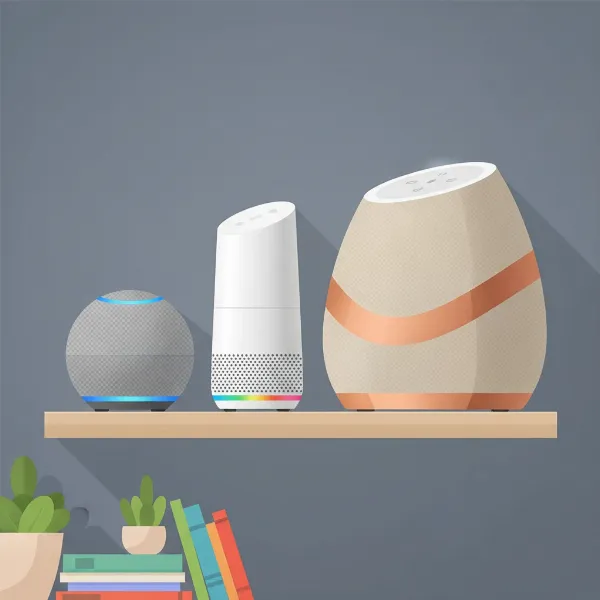 A collection of different smart speaker types, including mini, mid-sized, and uniquely designed models
Classifying Smart Speakers by Size and Design
The physical form factor of smart speakers varies greatly, designed to fit different spaces and aesthetic preferences within a home. Mini smart speakers, such as the Amazon Echo Dot or Google Nest Mini, are incredibly compact and unobtrusive. Their small footprint makes them ideal for bedrooms, bathrooms, or tight kitchen counters, providing smart capabilities without occupying much space. These often feature a spherical or puck-like design, blending seamlessly into modern decor.
Mid-sized smart speakers, like the standard Amazon Echo or Google Nest Audio, offer a balance of size and audio performance. They are larger than their mini counterparts, allowing for more powerful drivers and richer sound, making them suitable for living rooms or larger bedrooms where music listening is a priority. Their designs tend to be more substantial, often cylindrical or fabric-covered, to enhance acoustic properties and visual appeal.
Large smart speakers, exemplified by the Amazon Echo Studio or Apple HomePod, are designed for premium audio experiences. These devices typically house multiple drivers and advanced acoustic technology to fill large rooms with high-fidelity sound. They often feature more distinctive or artistic designs, intended to be focal points rather than hidden away. Beyond these standard classifications, some smart speakers boast truly unique designs, incorporating displays, projectors, or unconventional shapes, catering to specific niche markets or advanced functionalities.
Guide to Choosing a Smart Speaker
Selecting the perfect smart speaker requires a thoughtful assessment of your personal needs, technological ecosystem, and budget. It’s not just about picking the loudest or most feature-packed device, but finding one that seamlessly integrates into your daily life and enhances your home environment. Taking the time to consider these factors upfront can save you from buyer’s remorse and ensure long-term satisfaction.
Identifying Your Usage Needs
Before diving into specifications, consider how you envision using a smart speaker. Do you primarily want it for background music and podcasts while cooking, or do you need a robust sound system for entertaining guests? Perhaps your main goal is to control smart lights, thermostats, and other home automation devices with simple voice commands. Understanding your primary purpose will narrow down the field considerably.
Think about specific features that are non-negotiable for you. Do you need a display for checking the time at your bedside, or a temperature sensor to trigger smart routines? Is privacy a paramount concern, demanding clear microphone-off options? Your budget also plays a crucial role; smart speakers range from affordable entry-level models to premium devices with advanced audio capabilities. Defining these parameters will help you prioritize features and set realistic expectations.
Comparing Brands and Models
Once you have a clear idea of your needs, research the reputable smart speaker brands and their specific models. Amazon, Google, and Apple dominate the market, each offering a distinct virtual assistant and ecosystem. If you’re already deeply integrated into one of these ecosystems (e.g., using Android phones and Google services, or frequently shopping on Amazon), choosing a speaker from that brand often simplifies setup and enhances compatibility.
Reading reviews and comparisons from trusted tech sites and user communities is invaluable. Pay attention to how different models perform in real-world scenarios, particularly concerning sound quality, voice assistant responsiveness, and smart home integration. Look for insights into long-term reliability and software updates. Examining technical specifications, such as driver size, connectivity options (Wi-Fi, Bluetooth, Matter), and sensor capabilities, will provide a detailed understanding of each device’s potential.
 A person thoughtfully considering different smart speaker options, perhaps browsing online or looking at models in a store
Essential Factors to Consider When Buying a Smart Speaker
When making your final decision, several key factors should guide your choice. Sound quality is often a top priority; a speaker might be smart, but if it doesn’t sound good for your favorite music or podcasts, it falls short. Look for clear vocals, decent bass response (especially for smaller units), and minimal distortion at higher volumes. Keep in mind that smaller speakers, like the Echo Dot 5th Gen, offer impressive sound for their size but won’t compete with larger, dedicated audio systems.
Connectivity is another crucial aspect. Ensure the speaker supports the Wi-Fi standards in your home and offers reliable Bluetooth for pairing with other devices. The presence or absence of a 3.5mm audio jack can be a dealbreaker for those wanting to connect to external wired speakers. Smart features go beyond basic voice commands; consider built-in sensors (temperature, motion), inter-device compatibility (e.g., Eero mesh extender), and the breadth of the assistant’s “skills” or routines.
Finally, don’t overlook design and durability. The speaker should aesthetically fit into your home and be built to last. While price is always a consideration, remember that value isn’t just about the cheapest option, but the device that best meets your needs for the cost. As tech expert Ty Pendlebury from CNET notes, “If you’re an Amazon household, the Echo Dot is the best value of the brand’s current crop.”
Comparison Table: Best Smart Speakers Today
Here’s a quick comparison of some of the leading small smart speakers to help you weigh your options, including the Amazon Echo Dot 5th Gen:
| Model | Pros | Cons | Estimated Price |
|---|---|---|---|
| Amazon Echo Dot (5th Gen) | Improved sound quality for its size, responsive Alexa, compact design, smart home sensors (temp, motion), Eero extender capability, affordable. | No 3.5mm audio jack, limited bass at high volumes, potential distortion at max volume, not a huge leap from 4th Gen for all, some smart home routines can be buggy, privacy concerns. | $49.99 – $59.99 |
| Google Nest Mini (2nd Gen) | Strong Google Assistant integration, good for vocals and podcasts, compact, easy setup for Google/Android users. | Weaker bass and flatter sound at high volumes compared to Echo Dot 5th Gen, older hardware, less advanced mic performance, can sound “weedy”. | $49.00 – $49.99 |
| Apple HomePod Mini | Excellent sound quality for its size, seamless Apple ecosystem integration, robust privacy features, Thread support. | Higher price, less versatile smart home compatibility outside Apple ecosystem, Siri can be less capable than Alexa or Google Assistant for general queries. | $99.00 |
Tips for Using and Maintaining Your Smart Speaker
To get the most out of your smart speaker and ensure its longevity, a few simple practices can make a significant difference. Just like any electronic device, proper care and strategic placement are key to optimal performance and a lasting smart home experience. These tips apply whether you own an Echo Dot 5th Gen or any other smart speaker, helping you maximize your investment.
Optimal Placement for Your Smart Speaker
The location of your smart speaker significantly impacts both its audio performance and its ability to pick up your voice commands. For the best sound dispersion, place it in an open area, away from corners or walls that might muffle the audio. Centrally located spaces like living rooms or kitchens often work well. If you’re using it primarily as an alarm clock, a bedside table is ideal, but consider the “with clock” version for better visibility. Avoid placing it near noisy appliances, as this can interfere with its microphone’s ability to hear your commands clearly.
Regular Cleaning for Longevity
Over time, dust and grime can accumulate on your smart speaker, potentially affecting its aesthetics and even its audio quality. Make it a habit to gently clean the device regularly. Use a soft, dry, lint-free cloth to wipe down the exterior. For fabric-covered speakers, a soft brush can help remove dust from the grille. Avoid using harsh chemicals or abrasive materials, and ensure no liquid gets into the speaker grilles or ports. A clean speaker not only looks better but also performs more consistently.
 Hands gently cleaning a smart speaker with a soft cloth, emphasizing care and maintenance
Keeping Your Smart Speaker’s Software Updated
Software updates are crucial for the security, performance, and functionality of your smart speaker. Manufacturers frequently release updates that introduce new features, improve voice recognition accuracy, fix bugs, and enhance security protocols. Most smart speakers, including the Echo Dot 5th Gen, update automatically when connected to Wi-Fi. However, it’s a good idea to occasionally check for updates manually through the companion app to ensure your device is running the latest software. This keeps your smart speaker operating at its peak potential.
Proper Usage for Extended Lifespan
While smart speakers are designed for daily use, mindful habits can contribute to their longevity. Avoid consistently playing music at maximum volume, as this can strain the speaker drivers over time and lead to distortion. If you need louder audio, consider linking multiple smart speakers for a multi-room setup or investing in a larger, more powerful speaker. Protect your device from extreme temperatures and direct sunlight, which can degrade internal components. If you’re not using the speaker for an extended period, consider unplugging it. Adhering to these simple usage guidelines will help your smart speaker remain a reliable companion for years to come.
Conclusion
The Amazon Echo Dot 5th Gen solidifies its position as a highly capable and exceptionally affordable mini smart speaker, delivering significant improvements in sound quality and adding valuable smart home sensors. Its enhanced audio, responsive Alexa, and seamless integration into the Amazon ecosystem make it an excellent choice for casual listeners and smart home enthusiasts alike. While it may not satisfy the most discerning audiophiles or offer a revolutionary leap for owners of the previous generation, its compact design, robust feature set, and attractive price point make it undeniably appealing. The Echo Dot 5th Gen truly excels as a versatile smart hub for any room, especially for those seeking an accessible entry into the smart home world or expanding an existing Alexa-powered setup. Given its compelling blend of performance and value, it continues to hold a strong claim as one of the best small smart speakers available today. What smart capabilities are you most excited to integrate into your home with a device like the Echo Dot 5th Gen?
Frequently Asked Questions
Is the Echo Dot 5th Gen much better than the 4th Gen?
The Echo Dot 5th Gen offers noticeable improvements, particularly in sound quality with clearer vocals and deeper bass for its size. It also adds useful features like built-in temperature and motion sensors, and the ability to function as an Eero Wi-Fi extender. While not a revolutionary overhaul, these enhancements provide a more polished and capable experience, making it a worthwhile upgrade for some users, especially if you’re keen on the new smart home sensor capabilities.
Can the Echo Dot 5th Gen replace a dedicated Bluetooth speaker?
For casual listening, background music, podcasts, and news, the Echo Dot 5th Gen offers surprisingly good sound for its compact size. It can certainly serve as a primary speaker in smaller rooms. However, for audiophiles or those seeking high-fidelity music playback with rich bass and high volumes without distortion, it may not fully replace a larger, dedicated Bluetooth speaker or a more premium Smart Speaker like the Echo Studio or Apple HomePod.
Does the Echo Dot 5th Gen have a 3.5mm audio jack?
No, the Amazon Echo Dot 5th Gen, unlike some earlier models, has removed the 3.5mm analog audio output. This means you cannot directly connect it to external wired speakers using an audio cable. If you wish to connect it to a larger sound system, you will need to do so wirelessly via Bluetooth.
Can the Echo Dot 5th Gen improve my Wi-Fi?
Yes, the Echo Dot 5th Gen includes a unique feature that allows it to act as an Eero mesh Wi-Fi extender. If you already own an Eero mesh Wi-Fi system, placing an Echo Dot 5th Gen in a suitable location can help expand your Wi-Fi coverage by up to 1,000 square feet and boost speeds. However, this functionality is limited to existing Eero networks and does not work with other Wi-Fi router brands.
What new sensors are in the Echo Dot 5th Gen?
The Echo Dot 5th Gen introduces both a built-in temperature sensor and a motion sensor. The temperature sensor allows you to create Alexa routines that trigger actions based on room temperature, such as turning on a fan if it gets too warm. The motion sensor can detect presence, enabling routines like switching on lights when someone enters a room, enhancing its smart home automation capabilities significantly.