Imagine a home where every device communicates effortlessly, responding to your voice or a simple routine. Smart speakers have become the command center for this vision, and those equipped with a built-in Zigbee hub take home automation to the next level. This guide explores the advantages of Zigbee integration, highlights the top smart speakers offering this feature, and provides essential tips to help you choose the perfect device for a seamlessly connected smart home.
Understanding Smart Speakers and the Zigbee Advantage
Smart speakers are more than just devices that play music; they are the interactive voice assistants and control hubs of modern homes. These wireless, AI-powered devices respond to spoken commands, providing information, managing schedules, making calls, and, crucially, orchestrating your smart home ecosystem. From the early days of basic voice commands to today’s sophisticated routines, smart speakers have evolved to integrate deeply with our daily lives.
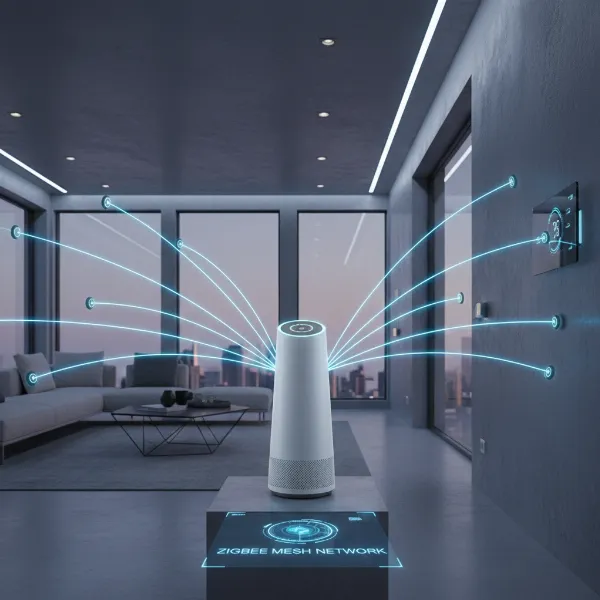 A conceptual image of a smart speaker wirelessly connecting to various smart home devices using Zigbee technology.
Why Zigbee for Your Smart Home?
Zigbee is a low-power, wireless communication protocol specifically designed for smart home devices, forming a reliable mesh network that allows devices to communicate efficiently and extend their range. Unlike Wi-Fi, which can consume more power and bandwidth, Zigbee excels in scenarios requiring frequent, small data transfers and long battery life for sensors.
Here’s why Zigbee is a game-changer for smart homes:
- Seamless Device Communication: Zigbee’s mesh networking capability means that each always-on device can act as a repeater, boosting the signal and ensuring stable communication across your home, even for devices far from the main hub. This robust network enhances reliability and extends coverage, preventing connectivity blackouts when a single device goes offline.
- Energy Efficiency: Zigbee devices are engineered for minimal power consumption. This allows battery-powered sensors (like door/window sensors or temperature sensors) to operate for years without needing a battery change, making them ideal for discreet and low-maintenance placements.
- Scalability: A single Zigbee network can support a vast number of devices—up to 65,000 nodes—allowing you to build extensive smart home systems without worrying about network overload.
- Enhanced Security: With AES-128 encryption, Zigbee provides a high level of security for data transmission between your smart home devices, protecting your commands and sensor data from unauthorized access.
- Cost-Effectiveness & Availability: Zigbee devices often utilize more affordable components, contributing to lower retail prices and a wider selection of products compared to other protocols like Z-Wave. This broad availability also makes it easier to expand your smart home setup.
- Matter Readiness: As the smart home landscape evolves, Zigbee plays a foundational role in the emerging Matter standard. Matter is a unified application layer protocol aiming to ensure interoperability across various brands and ecosystems. While Matter often runs over Thread or Wi-Fi, the underlying principles of low-power mesh networking, pioneered by Zigbee, are crucial for future-proof smart home integration.
|
Our Picks for the Best Smart Speaker in 2026
As an Amazon Associate I earn from qualifying purchases.
|
||
| Num | Product | Action |
|---|---|---|
| 1 | WiiM Sound Lite Smart Speaker, Hi‑Res 24‑bit/192 kHz, AI RoomFit™ Room Correction, 100W Peak, Wi‑Fi 6E/Bluetooth 5.3, Multi‑Room & Stereo Pairing, Black |

|
| 2 | aowoka Bluetooth Speaker, 2025 Portable Wireless Speakers with Led Light, Bluetooth 5.4, 24H Playtime, Enhanced Bass, IPX7 Waterproof, Outdoor Speaker for Travel, Sport, Party, Biking. |
|
| 3 | Bluetooth Speaker with HD Sound, Portable Wireless, IPX5 Waterproof, Up to 20H Playtime, TWS Pairing, BT5.3, for Home/Party/Outdoor/Beach, Electronic Gadgets, Birthday Gift (Black) |
|
| 4 | Sonos Era 100 - White - Wireless, Alexa Enabled Smart Speaker |
|
| 5 | Portable Bluetooth Speaker Valentines Gifts For Him: Powerful Crystal Clear Sound/Romantic Light/IPX5 Waterproof/All Day Playtime/BT 5.3/TWS Paring,Small Wireless Speaker for Outdoor-Travel-Date Night |
|
| 6 | Mini Bluetooth Speaker, Smart Wireless Portable Speaker with Touchscreen, Loud HD Sound, LED Lights, BT5.4, All In One Small Audio for Home/Outdoor/Travel/Shower/Party/Beach/Camping/Hiking/Cycling |
|
| 7 | Sony SRS-XB100 Wireless Bluetooth Portable Lightweight Super-Compact Travel Speaker, Durable IP67 Waterproof & Dustproof Shower Speaker, 16 Hour Battery, Versatile Strap, & Hands-free Calling, Black |
|
| 8 | Google Audio Bluetooth Speaker - Wireless Music Streaming, Powerful Sound, Assistant Built-in, Wi-Fi and Bluetooth Connectivity, Smart Home Control, Stereo Pairing - Chalk |
|
| 9 | Belkin SOUNDFORM Elite Hi-Fi Smart Speaker + Wireless Charger (Alexa Voice-Controlled Bluetooth Speaker) Sound Technology By Devialet, Fast Wireless Charging for iPhone, Samsung Galaxy & More - White |
|
| 10 | Bluetooth Speaker with HD Sound and Lights, Portable Wireless, Long-lasting battery life, TWS Pairing, for Home/Party/Outdoor/Travel/Beach, Stocking Stuffers, White Elephant Gifts for Adults (Black) |
|
Smart Speakers with Built-in Hubs vs. External Hubs
Historically, setting up a smart home often required a separate hub or bridge for each communication protocol (e.g., one for Zigbee, another for Z-Wave). Smart speakers with built-in Zigbee hubs simplify this considerably. They act as a central coordinator, allowing you to connect and control compatible Zigbee devices directly, reducing clutter, streamlining control through a single app or voice assistant, and cutting down on costs. This integration makes it much easier to manage your smart lights, sensors, locks, and other devices without needing multiple dedicated hardware hubs.
Top Smart Speakers with Built-in Zigbee Hubs
When it comes to smart speakers with integrated Zigbee hubs, Amazon’s Echo lineup stands out as a dominant force, offering robust control for a wide array of smart home devices.
Amazon Echo (4th Gen)
The Amazon Echo (4th Gen) is a spherical device that combines improved audio quality with a powerful built-in Zigbee smart home hub. This makes it an excellent choice for those looking to consolidate their smart home control.
- Overview: Features a full-range speaker and dual front-firing tweeters for rich, detailed sound. It integrates Alexa, enabling voice control for music, information, and smart home routines. Its distinct spherical design also supports multiroom audio.
- Pros: Native Zigbee hub simplifies device setup for compatible lights, sensors, and locks, eliminating the need for an additional bridge. It also boasts Matter readiness, enabling cross-platform automation, and offers strong multiroom audio performance.
- Cons: The Echo ecosystem is Alexa-centric, which might not suit users primarily invested in Google Assistant or Apple HomeKit. Additionally, some users have privacy concerns regarding always-listening assistants.
- Price Range: ~$70-100
Amazon Echo Show 8 (2nd/3rd Gen)
The Echo Show 8 takes the functionality of the Echo (4th Gen) and adds a vibrant display, making smart home management even more intuitive.
- Overview: Features an 8-inch HD touchscreen, ideal for video calls, security camera feeds, and glanceable routines. It includes a built-in Zigbee hub, allowing direct control of many smart home devices.
- Pros: The visual interface significantly enhances smart home management, offering a central control panel for lights, cameras, and schedules. It supports Alexa and Zigbee-compatible devices, providing a versatile and integrated experience.
- Cons: Similar to other Echo devices, it’s primarily an Alexa-centric experience. Its larger footprint might also be a consideration for smaller spaces.
- Price Range: ~$100-150
Amazon Echo Studio
For audiophiles seeking premium sound alongside comprehensive smart home control, the Amazon Echo Studio is a compelling option.
- Overview: Designed for immersive audio, featuring five directional speakers that produce powerful bass, dynamic mids, and crisp highs. It supports Dolby Atmos and spatial audio technology, adapting sound to any room. Like its Echo counterparts, it includes a built-in Zigbee smart home hub.
- Pros: Delivers exceptional sound quality, particularly for music lovers and home theater enthusiasts. Its integrated Zigbee hub ensures robust smart home control within a premium audio package.
- Cons: It’s a larger device, requiring more space. To fully experience its audio capabilities, a subscription to Amazon Music HD is often recommended.
- Price Range: ~$200
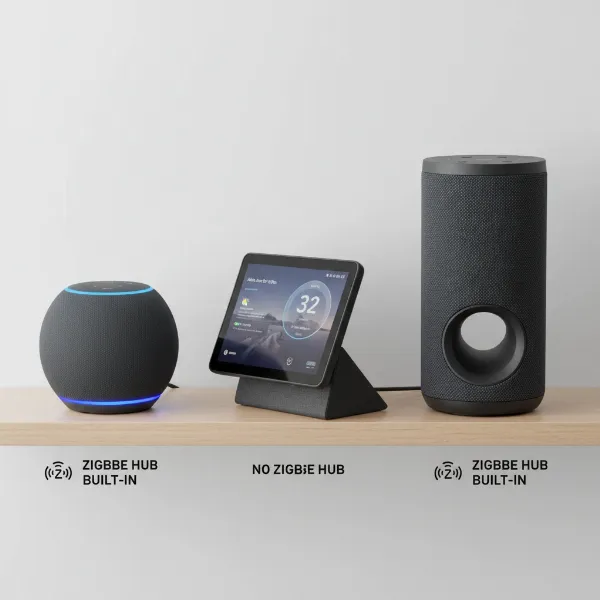 A visual comparison of Amazon Echo smart speakers that feature built-in Zigbee hubs.
Other Amazon Echo Devices with Built-in Zigbee Hubs
Amazon continues to integrate Zigbee hubs into its expanding Echo range. Other models that support built-in Zigbee for smart home control include:
- Echo Dot Max (2025 release)
- Echo Hub
- Echo Plus (2nd Gen)
- Echo Show 10 (3rd Gen)
- Echo Show 11 (2025 release)
- Echo Show 15 (2nd Gen)
These devices offer varying form factors and features, but all provide the convenience of a built-in Zigbee hub for seamless smart home integration.
How to Choose the Best Smart Speaker with Built-in Zigbee
Selecting the ideal smart speaker for your home requires considering several key factors to ensure it meets your specific needs and seamlessly integrates with your lifestyle.
Assess Your Smart Home Ecosystem
Your existing smart home devices and preferred voice assistant (Alexa, Google Assistant, or Siri) are crucial considerations. If you already have a collection of Alexa-compatible devices or frequently use Amazon’s services, an Echo device with a built-in Zigbee hub will offer the most seamless experience. While Matter aims to unify ecosystems, choosing a speaker that aligns with your current setup can reduce friction during integration.
Prioritize Sound Quality
Are you an audiophile or do you primarily use your smart speaker for casual listening and voice commands? Higher-end models like the Echo Studio offer immersive audio, while the Echo (4th Gen) provides a balanced, room-filling sound suitable for most listeners. Consider listening to reviews or, if possible, testing units in person to assess mid-range clarity and volume distortion.
Connectivity and Future-Proofing
Look for speakers that support the latest Zigbee versions (e.g., 3.0) for the broadest compatibility with Zigbee devices. Also, consider devices that are “Matter-ready.” While Zigbee and Matter are distinct protocols (Zigbee being a full-stack protocol and Matter an application layer), devices that support both, or are upgradable to Matter, offer better future-proofing for an evolving smart home landscape.
Design, Size, and Placement
Smart speakers come in various shapes and sizes, from compact mini speakers to larger smart displays. Consider where you intend to place the speaker and how its design will fit into your home decor. A smart display like the Echo Show 8 is excellent for a kitchen or common area where visual information is helpful, while a smaller Echo (4th Gen) might be better for a bedroom or office.
Budget Considerations
Smart speakers with built-in Zigbee hubs vary in price, typically ranging from budget-friendly options to premium audio devices. Determine your budget and balance it against the features and audio quality you prioritize. Often, the Amazon Echo (4th Gen) offers an excellent balance of performance, features, and price for most users seeking Zigbee integration.
Comparison Table of Leading Smart Speakers with Built-in Zigbee
| Model | Voice Assistant | Built-in Zigbee Hub | Key Features | Pros | Cons | Price Range (Approx.) |
|---|---|---|---|---|---|---|
| Amazon Echo (4th Gen) | Alexa | Yes | Spherical design, improved sound, Matter-ready, temperature sensor | Simplifies Zigbee device setup, robust routines, multiroom audio | Alexa-centric ecosystem, audio not always top-tier for audiophiles | $70 – $100 |
| Amazon Echo Show 8 (2nd/3rd Gen) | Alexa | Yes | 8-inch HD display, video calls, visual smart home control | Visual smart home management, versatile display for feeds & schedules | Alexa-centric ecosystem, larger footprint than standard Echo | $100 – $150 |
| Amazon Echo Studio | Alexa | Yes | Immersive sound, Dolby Atmos, spatial audio processing | Premium, room-filling sound, strong smart home integration | Larger device, best audio requires Amazon Music HD, higher price point | $200 |
Maximizing Your Smart Speaker with Zigbee: Tips and Best Practices
Once you’ve chosen your smart speaker with a built-in Zigbee hub, these tips will help you get the most out of your connected home.
- Optimal Placement for Network Performance: Place your smart speaker strategically to ensure good Wi-Fi and Zigbee mesh coverage throughout your home. Central locations are often best, allowing the Zigbee signal to reach all your connected devices efficiently. Remember that Zigbee devices act as repeaters, so having multiple always-on devices can strengthen your network.
- Regular Software Updates: Always keep your smart speaker’s software up to date. Manufacturers frequently release updates that improve security, add new features, enhance compatibility with new devices, and optimize performance.
- Explore Routines and Automations: Leverage the power of your Zigbee-enabled smart speaker to create sophisticated routines. For example, you can set lights to turn on when a Zigbee motion sensor detects movement, or have your thermostat adjust when a Zigbee temperature sensor registers a change. This not only adds convenience but can also lead to energy savings.
- Manage Privacy Settings: Familiarize yourself with your smart speaker’s privacy controls. Most devices allow you to review and delete voice recordings, manage microphone access, and understand how your data is used. Using physical mute buttons for the microphone can provide peace of mind.
- Expand Your Network Smartly: As your smart home grows, consider adding more Zigbee devices. Each mains-powered Zigbee device (like smart plugs or light bulbs) acts as a repeater, extending the range and stability of your Zigbee mesh network, ensuring reliable communication even in larger homes.
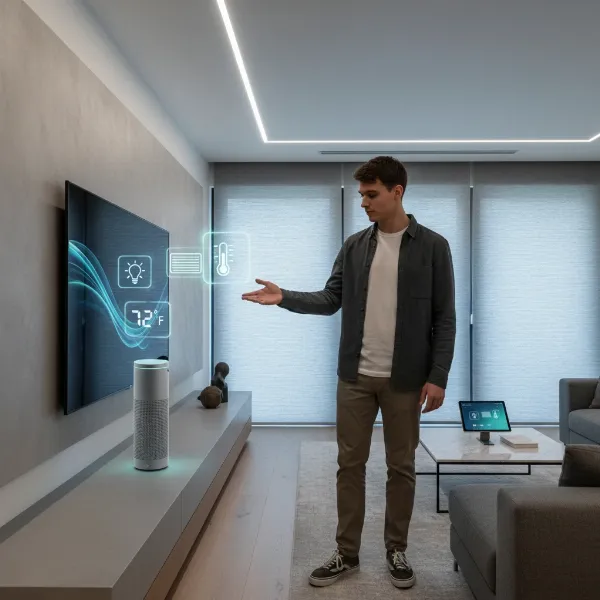 A person interacting with a smart speaker to activate a smart home routine, illustrating efficient automation.
> “The true magic of a smart home isn’t just voice control, but the effortless harmony created when devices communicate intelligently. Zigbee hubs in smart speakers are a cornerstone of this integration, simplifying complex setups into intuitive experiences.” – Alex Chen, Smart Home Integration Specialist
Conclusion
The journey into smart home automation is increasingly simple and powerful, thanks to advancements in smart speaker technology. By choosing a smart speaker with a built-in Zigbee hub, you gain a robust, energy-efficient, and highly scalable foundation for your connected home. Devices like the Amazon Echo (4th Gen), Echo Show 8, and Echo Studio offer not only impressive audio and virtual assistant capabilities but also the critical ability to directly control a wide range of Zigbee smart devices without the need for additional bridges.
Embrace the future of unified smart homes, where interoperability is key and your voice is the command. With the right smart speaker, you’re not just buying a gadget; you’re investing in a more convenient, secure, and intelligent living space.
What smart home automation will you implement first to transform your home?
Frequently Asked Questions
What is Zigbee and how does it work with smart speakers?
Zigbee is a low-power, wireless communication protocol designed for smart home devices. When integrated into a smart speaker, it creates a mesh network, allowing the speaker to directly communicate with and control Zigbee-compatible devices like lights, sensors, and locks. This eliminates the need for a separate dedicated Zigbee hub.
Can all smart speakers control Zigbee devices?
No, not all smart speakers have a built-in Zigbee hub. Only specific models, predominantly within the Amazon Echo line (such as the Echo (4th Gen), Echo Show devices, and Echo Studio), include this functionality. Other smart speakers often rely on Wi-Fi or other protocols like Thread, and would require a separate Zigbee hub to control Zigbee devices.
What is Matter, and how does it relate to Zigbee and smart speakers?
Matter is a new universal application layer standard designed to unify smart home device communication across different brands and platforms (e.g., Apple HomeKit, Google Home, Amazon Alexa). While Zigbee is a full-stack wireless protocol, Matter runs over underlying radio protocols like Thread or Wi-Fi. Many new smart speakers, especially those with built-in Zigbee, are also Matter-ready, allowing them to participate in this evolving unified ecosystem.
Are smart speakers with built-in Zigbee hubs secure?
Yes, Zigbee uses robust AES-128 encryption to secure communication between devices on its mesh network, providing a relatively high level of protection against unauthorized access. Reputable manufacturers like Amazon also implement security measures at the software level and offer privacy controls for their smart speakers.
Do I still need a separate hub if my smart speaker has Zigbee?
If your smart speaker has a built-in Zigbee hub, you generally do not need a separate dedicated Zigbee hub. The Smart Speaker itself acts as the central controller for your Zigbee devices, simplifying your setup and reducing hardware clutter. However, for other protocols like Z-Wave, a separate hub would still be necessary.