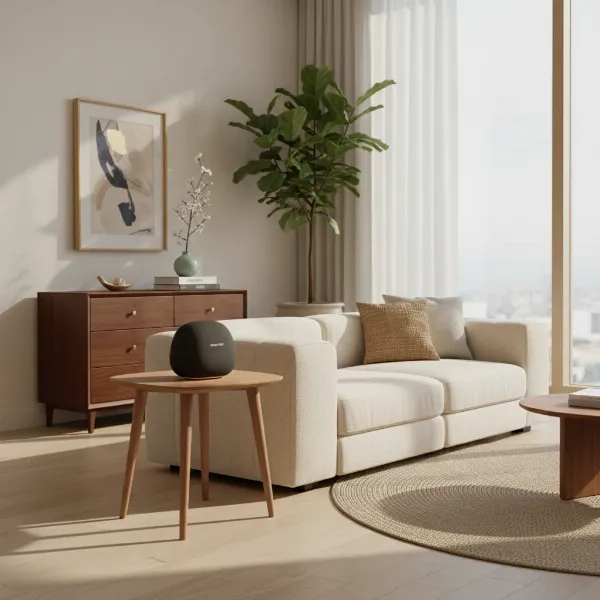
Smart speakers have become the central nervous system of countless modern homes, managing schedules, playing music, and controlling connected devices with just a voice command. Yet, placing these technological marvels often results in cluttered countertops, tangled wires, and less-than-optimal sound performance. The solution? Thoughtfully chosen wall-mounting accessories. By integrating your smart speaker seamlessly into your living space, you can unlock superior audio, reclaim valuable surface area, and enhance your home’s aesthetic. This comprehensive guide will navigate the Best Accessories For Mounting Smart Speakers On Walls, ensuring you make an informed choice that perfectly complements your smart home ecosystem and lifestyle.
The Evolution of Smart Speaker Mounting Solutions
The journey from bulky desktop speakers to sleek, voice-controlled smart devices has been remarkable. As smart speakers shrink in size and grow in capability, the way we integrate them into our homes evolves. Wall mounting is no longer just for large home theater setups; it’s a practical and stylish choice for even the smallest smart speakers, offering a range of benefits that go beyond simple aesthetics.
Why Wall Mounting Your Smart Speaker Matters
|
Our Picks for the Best Smart Speaker in 2026
As an Amazon Associate I earn from qualifying purchases.
|
||
| Num | Product | Action |
|---|---|---|
| 1 | Sonos Era 100 - White - Wireless, Alexa Enabled Smart Speaker |

|
| 2 | Google Audio Bluetooth Speaker - Wireless Music Streaming, Powerful Sound, Assistant Built-in, Wi-Fi and Bluetooth Connectivity, Smart Home Control, Stereo Pairing - Chalk |
|
| 3 | Sony SRS-XB100 Wireless Bluetooth Portable Lightweight Super-Compact Travel Speaker, Durable IP67 Waterproof & Dustproof Shower Speaker, 16 Hour Battery, Versatile Strap, & Hands-free Calling, Black |
|
| 4 | Belkin SOUNDFORM Elite Hi-Fi Smart Speaker + Wireless Charger (Alexa Voice-Controlled Bluetooth Speaker) Sound Technology By Devialet, Fast Wireless Charging for iPhone, Samsung Galaxy & More - White |
|
| 5 | Bluetooth Speaker with HD Sound and Lights, Portable Wireless, Long-lasting battery life, TWS Pairing, for Home/Party/Outdoor/Travel/Beach, Stocking Stuffers, White Elephant Gifts for Adults (Black) |
|
| 6 | Portable Bluetooth Speaker Valentines Gifts For Him: Powerful Crystal Clear Sound/Romantic Light/IPX5 Waterproof/All Day Playtime/BT 5.3/TWS Paring,Small Wireless Speaker for Outdoor-Travel-Date Night |
|
| 7 | Bluetooth Speaker with HD Sound, Portable Wireless, IPX5 Waterproof, Up to 20H Playtime, TWS Pairing, BT5.3, for Home/Party/Outdoor/Beach, Electronic Gadgets, Birthday Gift (Black) |
|
| 8 | aowoka Bluetooth Speaker, 2025 Portable Wireless Speakers with Led Light, Bluetooth 5.4, 24H Playtime, Enhanced Bass, IPX7 Waterproof, Outdoor Speaker for Travel, Sport, Party, Biking. |
|
| 9 | Mini Bluetooth Speaker, Smart Wireless Portable Speaker with Touchscreen, Loud HD Sound, LED Lights, BT5.4, All In One Small Audio for Home/Outdoor/Travel/Shower/Party/Beach/Camping/Hiking/Cycling |
|
| 10 | WiiM Sound Lite Smart Speaker, Hi‑Res 24‑bit/192 kHz, AI RoomFit™ Room Correction, 100W Peak, Wi‑Fi 6E/Bluetooth 5.3, Multi‑Room & Stereo Pairing, Black |
|
Opting to wall mount your smart speaker offers a multitude of advantages that significantly enhance both functionality and interior design. Firstly, it’s a definitive space-saving solution, freeing up valuable counter or tabletop space in kitchens, bathrooms, or nightstands, which is particularly beneficial in smaller living areas. Secondly, wall mounts dramatically improve aesthetic appeal by minimizing clutter and often incorporating smart cable management systems, transforming messy wires into a clean, integrated look. This creates a modern, minimalist vibe that blends seamlessly with your decor.
Beyond visuals, mounting your speaker can lead to improved audio performance and dispersion. Elevating a smart speaker to an optimal height allows sound waves to spread more evenly throughout the room, eliminating ‘dead spots’ and enhancing clarity. For devices designed for 360-degree audio, proper placement on a wall can truly unleash their potential, providing a richer, more immersive sound experience. Finally, wall mounting ensures safety and damage prevention. Speakers on surfaces are vulnerable to accidental knocks, spills, or falls, especially in busy households with children or pets. Securing them to the wall mitigates these risks, protecting your investment.
A Look at Different Wall Mount Types
The market offers a diverse array of wall mount accessories, each designed to meet specific needs and speaker types. Understanding these variations is key to finding your perfect match.
- Fixed Mounts: These are the simplest and most discreet options. Fixed mounts hold your speaker in a single, non-adjustable position, making them ideal when you know exactly where you want your sound directed and don’t require frequent changes. They are often low-profile and cost-effective.
- Tilt and Swivel Mounts: Offering more directional control, tilt and swivel mounts allow both vertical (tilt) and horizontal (swivel) adjustments. This flexibility is excellent for fine-tuning sound towards a listening area, adjusting for reflections, or optimizing placement in corners or rooms with multiple seating arrangements.
- Articulating Arm Mounts: For maximum versatility, articulating arm mounts feature extendable arms that allow you to pull your speaker out from the wall, rotate it, and then retract it. While potentially more noticeable, they provide unparalleled flexibility for positioning and can be particularly useful for accessing ports or for unique room layouts.
- Outlet Hangers: A remarkably minimalist solution, outlet hangers integrate directly with an electrical outlet, providing power and support for smaller smart speakers like the Amazon Echo Dot (4th Generation). They effectively hide cables by wrapping them within the mount, offering an incredibly clean, cable-free appearance.
- Custom Shelves & In-Wall Solutions: For a truly integrated look, custom shelves offer a simple platform, often barely larger than the speaker itself, suitable for devices like the HomePod Mini. More advanced in-wall or surface-mount hybrid brackets allow for semi-flush installations, where part of the speaker is recessed. These require more planning and potentially wall modification but result in the cleanest possible finish.
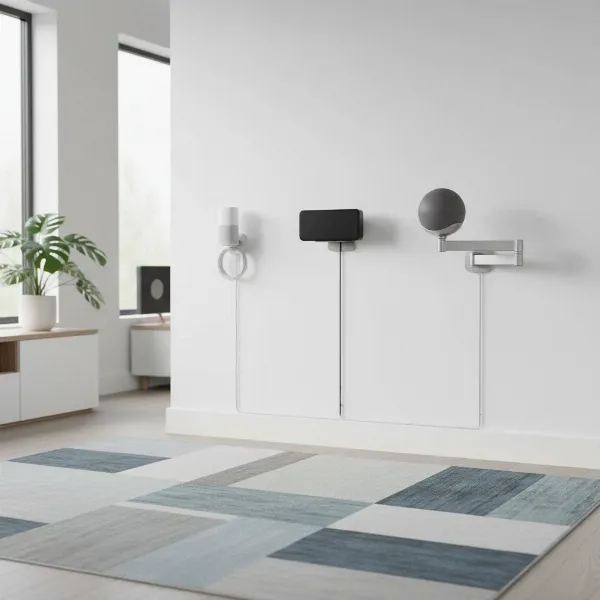 Various types of smart speaker wall mounts including fixed, articulating, and outlet hangers demonstrating versatility for home audio integration.
Guiding Your Choice: Factors to Consider for the Perfect Wall Mount
Selecting the right wall mount for your smart speaker involves more than just picking the first option you see. A few critical factors will ensure your mount is not only effective but also safe and aesthetically pleasing.
Compatibility with Your Smart Speaker
The most crucial factor is ensuring the mount is compatible with your specific smart speaker model. Many mounts are device-specific, precisely designed for an Amazon Echo Dot (4th Gen), Google Nest Mini, Apple HomePod Mini, or a Sonos speaker. These offer the best fit and often incorporate specific features like secure retention or optimal acoustic positioning for that device. While universal options exist, especially for bookshelf-style smart speakers, always double-check the dimensions, screw patterns, and securing mechanisms to prevent instability or damage.
Weight Capacity and Material Durability
Safety is paramount. The mount’s maximum load rating should always exceed your speaker’s weight by at least 25% to ensure long-term stability and safety. Attempting to mount a heavy speaker on an inadequate bracket is a recipe for disaster. Regarding material durability, mounts typically come in steel, aluminum, or reinforced plastic. Steel and aluminum offer superior strength and are recommended for heavier speakers or for mounts requiring articulation. Plastic mounts are lighter and more budget-friendly, suitable for compact and lightweight smart speakers.
Adjustability for Optimal Sound
The ability to adjust your speaker’s position significantly impacts sound quality and coverage. Tilt, swivel, and pan functions allow you to direct sound precisely towards your primary listening area. For instance, if mounting a speaker high on a wall, a tilt-down feature is essential to aim sound at ear level. Swivel and pan capabilities are vital for corner placements or large rooms where sound needs to be distributed across a wider arc. Some advanced mounts offer independent adjustments, providing granular control over your acoustic environment.
Installation Ease and Wall Type Considerations
Before installation, consider the ease of the process and the type of wall you’re mounting to. Many smaller smart speaker mounts, especially outlet hangers, are designed for simple, DIY installation. However, heavier speakers or more complex articulating mounts might benefit from professional installation to ensure maximum security. It is highly recommended to mount into a wall stud for any substantial speaker, as drywall alone may not provide sufficient support, especially over time. If a stud isn’t available, ensure you use appropriate heavy-duty drywall anchors specifically rated for the speaker’s weight.
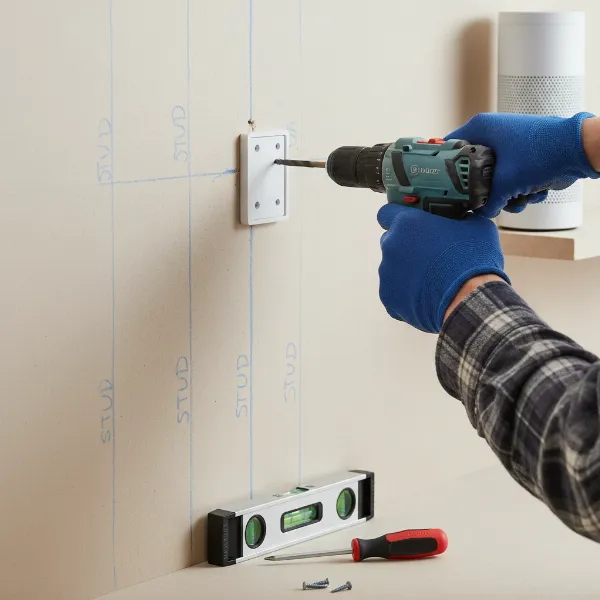 A person installing a smart speaker wall mount onto a wall, highlighting the importance of proper tools and considering wall type for secure installation.
Aesthetic Integration and Cable Management
The beauty of wall mounting lies in its ability to blend technology seamlessly into your home. Choose a mount that matches or complements your room’s decor and the speaker’s design. Low-profile mounts that keep the speaker close to the wall are often preferred for a clean look. Effective cable management is also crucial. Many mounts feature integrated channels or clips to route and hide power cords, preventing unsightly tangles and contributing to a polished, minimalist finish. For speakers requiring power, consider mounts that utilize existing outlets or allow for in-wall cable concealment for the ultimate tidy setup.
Top Picks: A Comparison of Leading Smart Speaker Wall Mount Accessories
When it comes to elevating your smart speaker, several excellent accessories stand out for their design, functionality, and specific applications. Here’s a comparison of some leading options that cater to different needs and smart speaker models:
| Model/Type | Advantages | Disadvantages | Ideal For |
|---|---|---|---|
| Echogear Outlet Hanger | Ultra-minimalist, no drilling required, hides power cables neatly | Limited to smaller, spherical smart speakers (e.g., Echo Dot 4th Gen) | Echo Dot (4th & 5th Gen), bathrooms, kitchens, small spaces, rented properties |
| WALI Universal Clamp Mount (SWM201) | High weight capacity (up to 55 lbs), adjustable width (5.5″-11″), tilt/swivel functions | Can be bulky, clamps are visible, less discreet design | Larger bookshelf-style smart speakers, surround sound setups, home offices |
| SPORTLINK HomePod Mini Wall Mount | Securely holds HomePod Mini, allows easy access to touch controls, compact | May slightly muffle sound due to direct wall contact, device-specific | HomePod Mini users, bedrooms, bathrooms, areas with limited surface space |
| Monoprice Universal Bracket (Soundbar/Speaker) | Highly versatile, strong steel construction, supports up to 33 lbs | Less aesthetic focus, may require additional cable management solutions | Larger smart speakers, soundbars, budget-conscious setups, home theater integration |
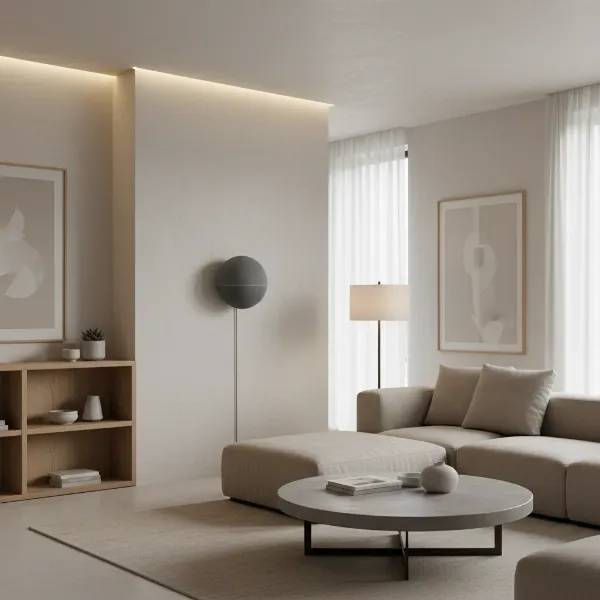 A sleek, wall-mounted smart speaker integrated into a modern home environment, showcasing clean lines and optimized sound placement.
Maximizing Your Mounted Smart Speaker’s Potential
Once your smart speaker is securely mounted, you’re not just gaining space and aesthetics; you’re also setting the stage for an optimized audio experience. Consider these tips to get the most out of your setup:
- Strategic Placement for Acoustics: Even with adjustability, the initial placement is crucial. Experiment with different wall locations and heights to find the “sweet spot” that best fills your room with sound, especially for speakers with 360-degree audio. Avoid placing speakers too close to corners if it leads to boomy bass, unless your speaker has acoustic calibration features.
- Regular Maintenance and Software Updates: Just like any other smart device, your wall-mounted smart speaker benefits from regular software updates. These often include performance enhancements, new features, and security patches. Keep your device clean by gently dusting it, especially around microphones and speaker grilles, to ensure optimal voice command recognition and sound clarity.
- Integrating with Smart Home Ecosystems: A wall-mounted smart speaker often becomes a central hub for your smart home. Ensure it’s properly integrated with all your other smart devices—lights, thermostats, security cameras—to maximize its utility. Its elevated position can also make it more accessible for voice commands throughout the room.
“The magic of a smart speaker truly comes alive when it disappears into your home, working silently and effectively. Wall mounts are key to achieving that seamless, intuitive experience, freeing up surfaces while enhancing both sound and style.” – Alex Chen, Smart Home Integration Specialist
Conclusion
Mounting your smart speaker on the wall is a transformative upgrade, offering a trifecta of benefits: reclaiming valuable space, elevating your home’s aesthetics, and significantly enhancing your audio experience. From the sleek simplicity of outlet hangers to the robust adjustability of articulating arm mounts, there’s a perfect accessory out there for every smart speaker and every home. By considering compatibility, durability, adjustability, and installation, you can confidently choose a solution that not only secures your device but also optimizes its performance and integrates it flawlessly into your connected living space.
Ready to declutter your countertops and amplify your audio? Which smart speaker accessory will you choose to transform your home?
Frequently Asked Questions
Can wall mounting improve my smart speaker’s sound quality?
Yes, absolutely. Wall mounting allows you to position your smart speaker at an optimal height, typically at or slightly above ear level, which can significantly improve sound dispersion and clarity. It helps eliminate obstructions that might muffle sound when the speaker is on a surface, leading to a richer, more immersive listening experience.
Are all smart speaker wall mounts universal?
No, not all smart speaker wall mounts are universal. Many are designed specifically for popular models like the Amazon Echo Dot, Google Nest Mini, or Apple HomePod Mini, ensuring a perfect fit and secure hold. While some universal clamping or shelf-style mounts exist for larger speakers, always check the mount’s specifications for compatibility with your particular smart speaker’s dimensions and weight.
How do I hide power cables for a wall-mounted smart speaker?
Many wall mounts, particularly outlet hangers, are designed with integrated cable management systems that allow you to coil and conceal excess cable within the mount itself, leading to a clean, wire-free look. For other mount types, you can use adhesive cable clips, cable raceways that blend with your wall, or, for a more permanent solution, route the cables discreetly inside the wall.
Is it safe to mount a smart speaker on drywall?
Mounting smaller, lighter smart speakers on drywall using appropriate anchors is generally safe. However, for heavier speakers or for mounts that offer articulation, it is highly recommended to install them directly into a wall stud for maximum security and stability. Always use anchors specifically rated for your speaker’s weight and ensure they are installed correctly.
What’s the difference between a fixed and an articulating mount?
A fixed mount holds your Smart Speaker in a single, unadjustable position, offering a very discreet and low-profile installation. An articulating (or full-motion) mount, on the other hand, features extendable arms that allow you to pull the speaker away from the wall, tilt, swivel, and rotate it. Articulating mounts provide greater flexibility for sound aiming and access but are typically more visible than fixed options.